






























Real estate FDI grew by 20.6% in 2024, supported by a tourism sector that welcomed 62.2 million international visitors.
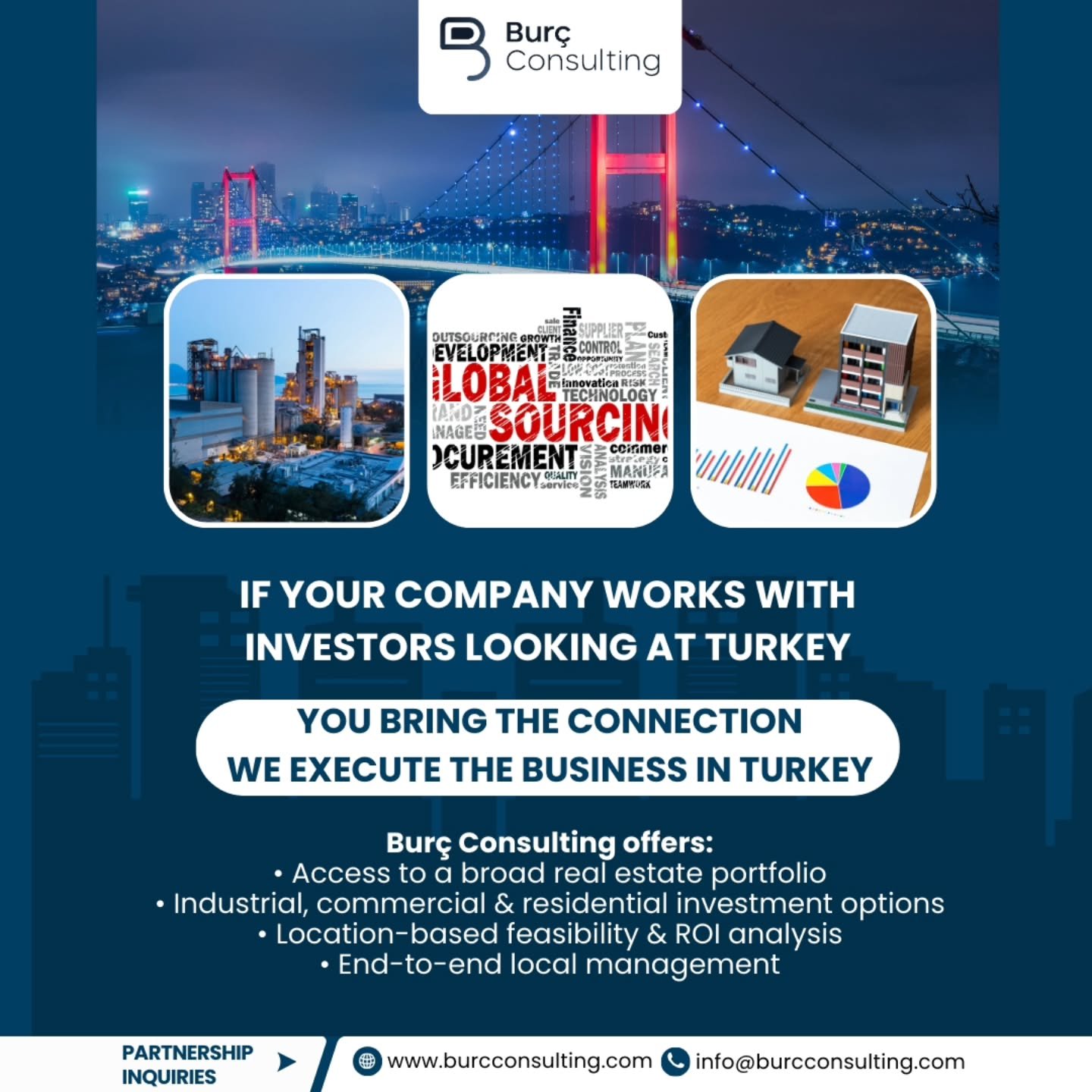
Türkiye continues to prove itself as a high-yield, opportunity-rich destination for global capital, maintaining a strong upward trajectory in Foreign Direct Investment (FDI) despite global economic headwinds. In 2024 and moving into 2026, total FDI into the country surpassed the $11.3 billion mark, with a significant $2.8 billion (roughly 25%) being directed specifically toward the real estate sector. This represents a robust 20.6% annual increasein property-related investment, reaffirming the market’s fundamental resilience and attractiveness to both institutional and individual investors.
A critical catalyst for this real estate influx is the record-breaking performance of the Turkish tourism sector. In 2024, Türkiye reached a historic high of 62.2 million international visitors, generating an impressive $57.1 billion in revenue. This tourism “explosion” has had direct and profound implications for the commercial real estate market. The hospitality sector is seeing a wave of new investments, from luxury hotel developments in Istanbul and Antalya to the “branded residences” market, which caters to the growing number of digital nomads and high-net-worth individuals choosing Türkiye as a long-term base.
Investors are increasingly focusing on the “yield play” rather than just capital appreciation. With the rise of the short-term rental market and the professionalization of property management in Türkiye, the hospitality real estate sector is offering returns that significantly outperform Western European averages. Furthermore, the significant improvement in Türkiye’s macroeconomic stability and the “normalization” of monetary policies have reduced risk perception among Western institutional investors. This has led to a transition from individual apartment sales to “block sales” of commercial buildings and hotel portfolios.
While the domestic market has seen some cooling due to higher local borrowing rates, international investors—particularly from the European Union, Gulf Cooperation Council (GCC), and Central Asia—remain “bullish.” The potential for future easing of global monetary policies is expected to drive even more capital into the Turkish market in the 2026-2027 period. For sourcing and investment professionals, the message is clear: Türkiye’s strong macroeconomic fundamentals, its pivot toward high-value manufacturing, and its status as a top-4 global tourism destination make it a primary pillar of stability. The real estate sector is no longer just about “buying property”; it is about investing in the infrastructure of a nation that is rapidly becoming a top-10 global economy.
Citations & Sources:
- Economic Statistics: Central Bank of the Republic of Türkiye (CBRT)
- Tourism Official: Ministry of Culture and Tourism – Republic of Türkiye
- Investor Network: YASED – International Investors Association