

















A Foreign Investment Strategy: Production in Türkiye, Profit in Syria
The Siren Call of Syria’s Rebuild
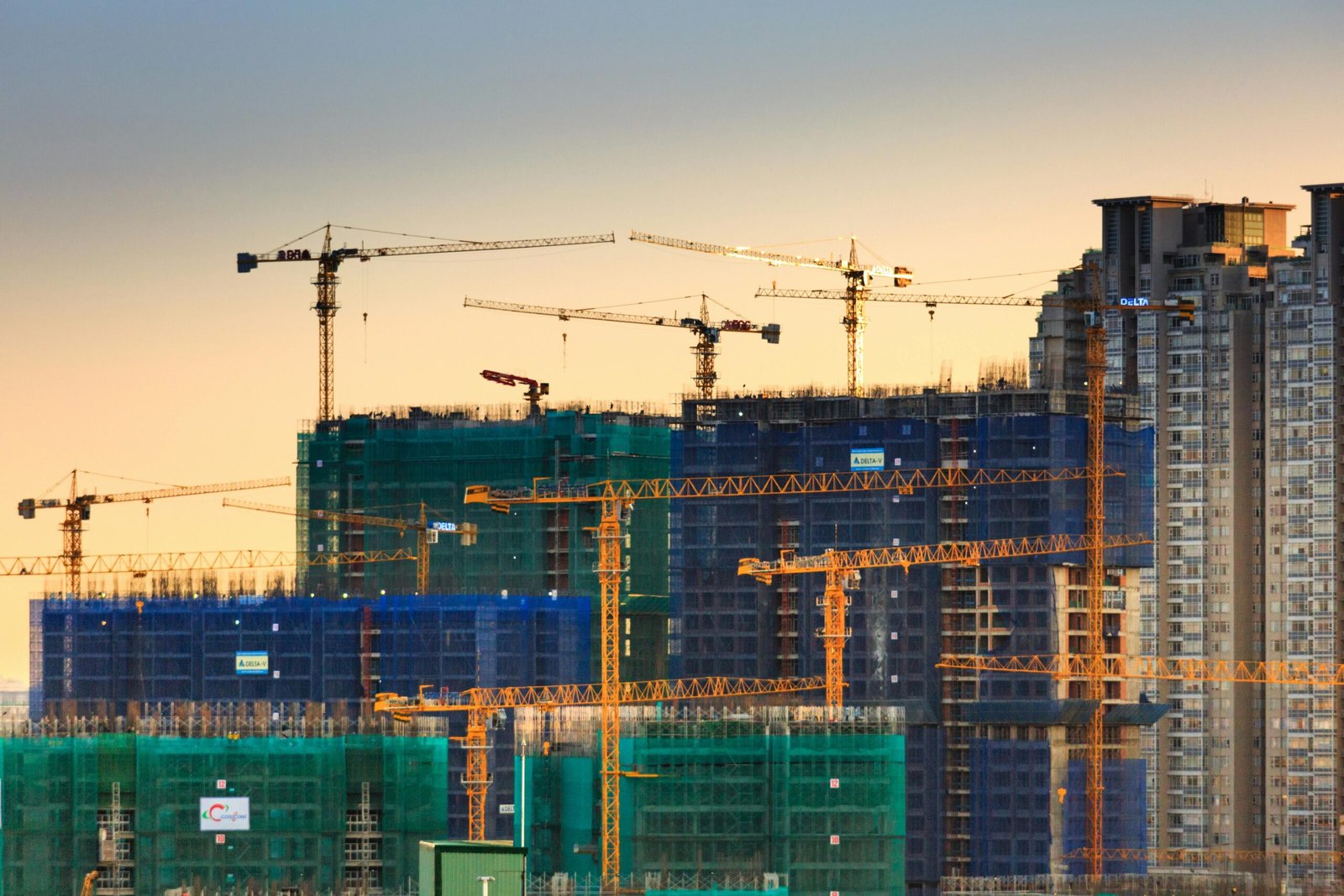
The reconstruction of Syria represents a colossal financial undertaking—a conservative $216 billion in estimated costs, according to the World Bank’s recent assessments. For multinational firms, the prospect of securing long-term contracts in this massive effort is highly attractive, promising decades of sustained growth in basic materials, infrastructure, and logistics.
However, the reality remains stark. Syria is still an economic and political quagmire. Sanctions, volatile security conditions, and a lack of predictable legal recourse render direct, large-scale investment nearly impossible for risk-averse global players. This contradiction—massive opportunity versus high risk—has spurred the search for a strategic compromise.
This compromise is now emerging across the border in Türkiye’s Hatay province. Positioned as a strategic “safe harbor,” Hatay offers a unique, incentivized, and de-risked approach to service the Syrian market. This post details how foreign capital can participate in the Syrian recovery without exposing core assets to its inherent instability, leveraging Türkiye’s post-disaster investment drive.
The Massive Cost and Risk of Syrian Reconstruction
The $216 Billion Prize (The Demand)
The World Bank’s 2025 assessment, which analyzed the impact of the conflict through 2024, estimates the total damage to physical assets at over $108 billion. When the cost of rebuilding and restoring services is factored in, the financial requirement surges past $216 billion.
The demand is predominantly concentrated in critical sectors:
- Infrastructure: An estimated $52 billion is needed to restore power grids, water utilities, and transportation networks.
- Residential Sector: Approximately $33 billion is required to rebuild and repair millions of damaged homes.
- Manufacturing and Services: Establishing new production capacity and commercial facilities is essential for economic recovery.
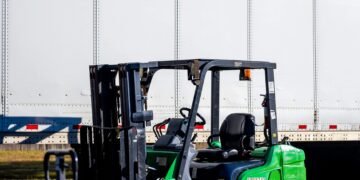
This immense need creates an unprecedented opportunity for suppliers of cement, steel, modular housing, heavy machinery, and specialized logistics.
The Constraint: Intolerable Risk
Despite the market size, direct investment faces critical hurdles:
- Political Fragility: The lack of a stable, unified political authority means property rights and regulatory environments can shift without notice.
- Economic Sanctions: Navigating complex international sanctions and maintaining compliance is exceptionally difficult for firms operating directly within Syrian territory.
- Security Volatility: While major conflict has subsided in many areas, localized security threats and unpredictable movements pose a continuous risk to physical assets and personnel.
Hatay: The De-Risked Logistics Fortress
The Turkish province of Hatay, a long-standing trade gateway to the Levant, has been recast as the perfect logistics buffer zone.
A. The Post-Earthquake Investment Opportunity
The devastating February 2023 earthquakes severely impacted Hatay’s physical and economic infrastructure. In response, the Turkish government, supported by substantial international financing, has made the region a priority zone for investment and reconstruction.
- International Support: The recovery effort is backed by significant funding, including a €400 million grant from the European Union Solidarity Fund (EUSF) and a $500 million World Bank program aimed at supporting business rehabilitation and job creation in the affected 11 provinces.
- Government Incentives: While specific legislation is often tailored, the core of Türkiye’s post-disaster strategy is to attract resilient, new foreign direct investment (FDI). This includes:
- Prioritized Investment Incentive Certificates granting substantial tax reductions (e.g., VAT and customs duty exemptions).
- Social Security Premium Support to lower employment costs.
- Subsidized Land Allocation in organized industrial zones (OIZs) to facilitate rapid construction of resilient, modern facilities.
For an international firm, establishing a facility in Hatay means benefiting from a secure, stable, and incentivized economic environment—Türkiye’s established legal framework and NATO security guarantees—while positioning itself inches away from the target market.
B. The ‘Production-in-Türkiye, Service-in-Syria’ Model
The business model is simple yet powerful:
- Asset Security: All high-value assets—factories, machinery, strategic inventory, and control centers—are established and maintained in Hatay.
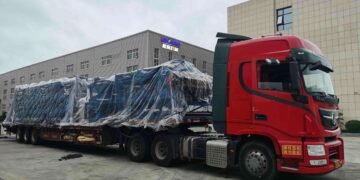
- Market Access: Products are manufactured or warehoused securely in Türkiye and only transported across the border via the established Cilvegözü/Bab al-Hawa customs point upon confirmed sale and payment.
This strategy ensures that if the political or security situation in Syria deteriorates, the company suffers no physical asset loss. Operations can be paused, and the Hatay facility can instantly pivot to servicing other viable markets, such as the growing Iraqi or domestic Turkish markets, safeguarding capital and ensuring business continuity.

EXPERT ANALYSIS: The Feasibility of the Hatay Hub Strategy
An Analysis by Burç Consulting, Near East Investment Risk Assessment
Ali Burç, Manager at Burç Consulting, emphasizes that the Hatay strategy shifts the investment paradigm from direct exposure to controlled transactional risk.
1. Capital Protection is Paramount:
“The primary value proposition of the Hatay Hub is asset security. For a multinational, the risk of losing a $40 million physical plant inside Syria is unacceptable. By placing that plant securely in Hatay, the firm trades the risk of total capital loss for the manageable risk of a shipment being delayed or cancelled. The Turkish jurisdiction provides the necessary legal and financial shield.”
2. The Economic Multiplier of Incentives:
“The post-earthquake incentives are not a marginal benefit; they are the economic engine that makes this model highly competitive. By reducing operational costs—via tax relief and subsidized labor—the Turkish government effectively helps offset the inherent higher costs of operating near a conflict zone, ensuring that goods produced in Hatay can be competitively priced for the Syrian market.”
3. Sectoral Focus:
“We see the greatest benefits for suppliers of low-mobility, high-value goods like prefabricated construction components, heavy earthmoving equipment, and large-scale utility systems. These items are best warehoused in a secure, immediately deployable location like Hatay, preventing them from being tied down or jeopardized by Syrian internal dynamics.”
4. The Compliance Advantage:
“Operating via Türkiye drastically simplifies sanction compliance. The investor can leverage Türkiye’s robust banking and customs system, implementing stringent Know Your Customer (KYC) and end-user verification procedures at the Turkish border. This level of institutional oversight is impossible to guarantee when operating entirely within Syria, making the Turkish base an essential legal buffer.”
Conclusion: Beyond the Risk
The reconstruction of Syria is not a question of if, but when and how. The consensus among international financial bodies is clear: recovery is necessary, yet political stability is elusive.
For the savvy foreign investor, the solution is to acknowledge the risk while building a physical barrier against it. The strategic coupling of Syria’s immense demand and Türkiye’s secure, incentivized, and geographically superior Hatay province creates a powerful and responsible investment corridor.
Hatay is not merely a logistics node; it is the fortified staging ground for the next wave of Syrian recovery capital. By investing in Hatay today, firms secure a foothold, benefit from unprecedented Turkish state incentives, and position themselves for exponential growth when the political climate eventually normalizes, all while ensuring the complete safety of their principal assets. It is the calculated, smart way to engage the Syrian opportunity.