






























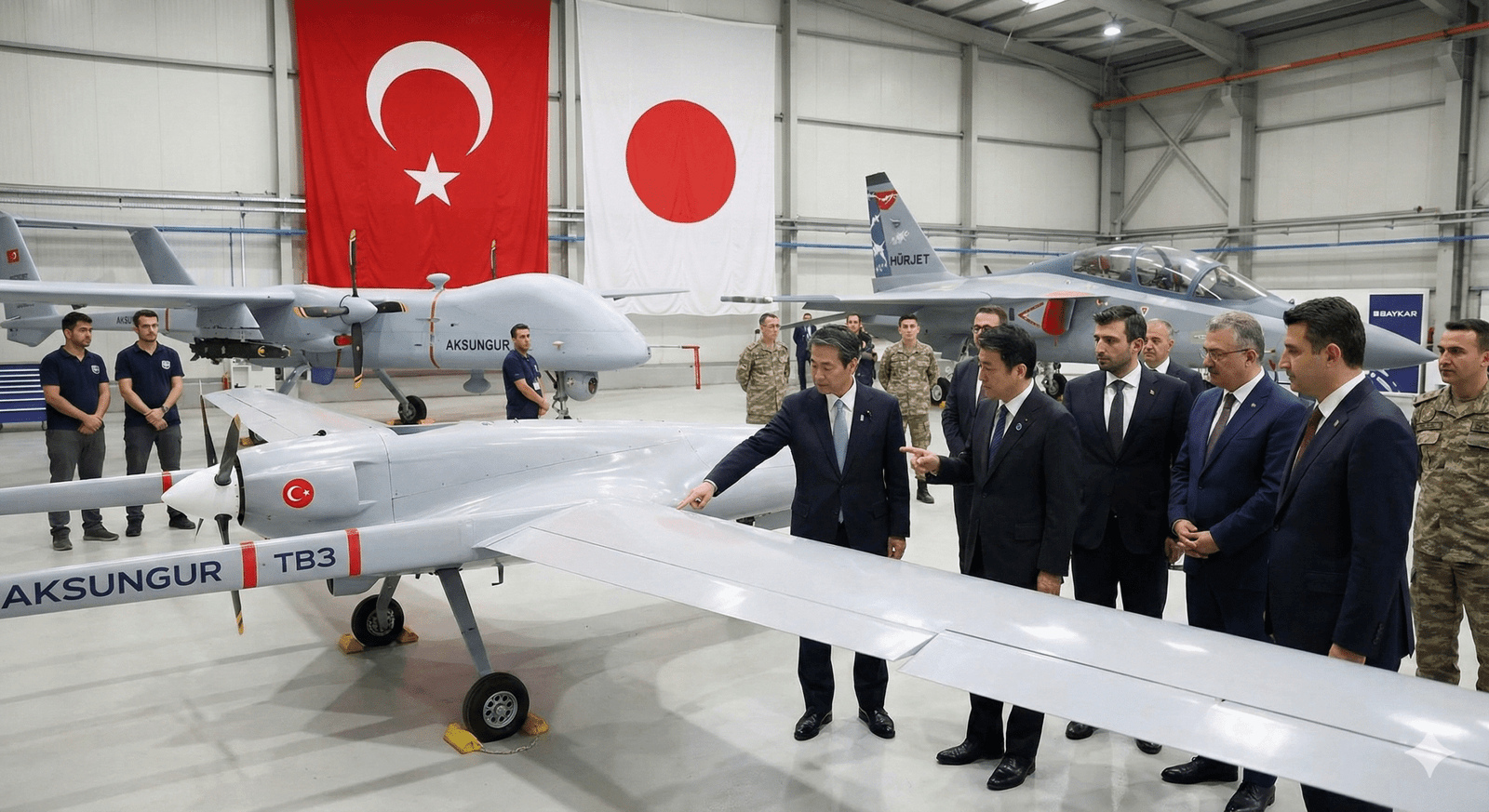
ISTANBUL – A landmark official visit by Japanese Defense Minister Gen Nakatani to Turkey has dramatically highlighted the country’s ascent as a global defense technology powerhouse. This unprecedented visit—the first by a Japanese defense minister—signals a new strategic era in Asia-Europe security cooperation, driven by Japan’s keen interest in Turkey’s indigenous and nationally developed defense systems.
The visit centered on site inspections of Turkey’s leading defense giants, including Turkish Aerospace Industries (TUSAŞ), the renowned drone producer Baykar, and major shipyards in Istanbul. This itinerary underscores Japan’s focus on high-growth Turkish technology sectors, particularly UAVs, naval modernization, and advanced jet training aircraft.
Focus on Proven Capabilities: The Drone Diplomacy
While no formal defense agreement was signed during the visit, high-level officials from both nations characterized the discussions as exceptionally productive and forward-looking. The primary focus remained on Turkey’s globally demonstrated competence in drone technology.
Specifically, the Japanese delegation was captivated by:
- Baykar’s Capabilities: Platforms like the combat-proven Bayraktar TB2, the heavy-duty AKSUNGUR, and the pioneering carrier-capable TB3 drone (designed for ship deployment) were under intense scrutiny.
- Aviation and Naval Modernization: The delegation also inspected the advanced jet trainer and light attack aircraft HÜRJET, as well as Turkey’s ambitious naval projects aimed at transforming existing fleet vessels into aircraft-deployable platforms. These areas align directly with Japan’s current strategic priorities and modernization needs.
Turkey: A Global Leader in Indigenous Production
Turkey’s defense industry has experienced exponential growth in recent years. The domestic production rate has surpassed 80%, and defense exports exceeded $5.5 billion USD in 2024. This success has established Turkey as one of the world’s leading UAV exporters, with its products currently operational in over 170 countries.
This geopolitical shift is highly attractive to international partners, not just for procurement, but for joint development and technology transfer opportunities.
Facilitating Strategic Defense and High-Tech Partnerships
The potential for deep cooperation between Turkey and Japan in defense technology opens significant doors for co-production, foreign direct investment (FDI) in specialized components, and R&D collaboration. For foreign suppliers and companies in the aerospace and defense value chain, establishing a Turkish presence has become strategically essential.
Ali Burç, Managing Partner at Burç Consulting, emphasizes the gravity of the visit: “A defense minister’s inspection is a precursor to major, long-term strategic investments, often involving complex technology transfer agreements. For defense and aerospace suppliers, the focus must immediately shift to establishing secure, compliant local manufacturing and R&D facilities to meet the stringent standards of both the Turkish and potential Japanese supply chains. Burç Consulting specializes in securing the high-level investment incentives (such as the Project-Based Incentive Scheme and R&D benefits) required for these capital-intensive, high-technology projects, ensuring foreign firms successfully integrate into this rapidly expanding sector.”
Reshaping Security Dynamics
The historic visit is poised to initiate deeper technological and industrial cooperation between Japan and Turkey. This collaboration is expected to reshape regional security balances and open new avenues for joint development, technology transfer, and achieving interoperability in critical defense technologies.