




















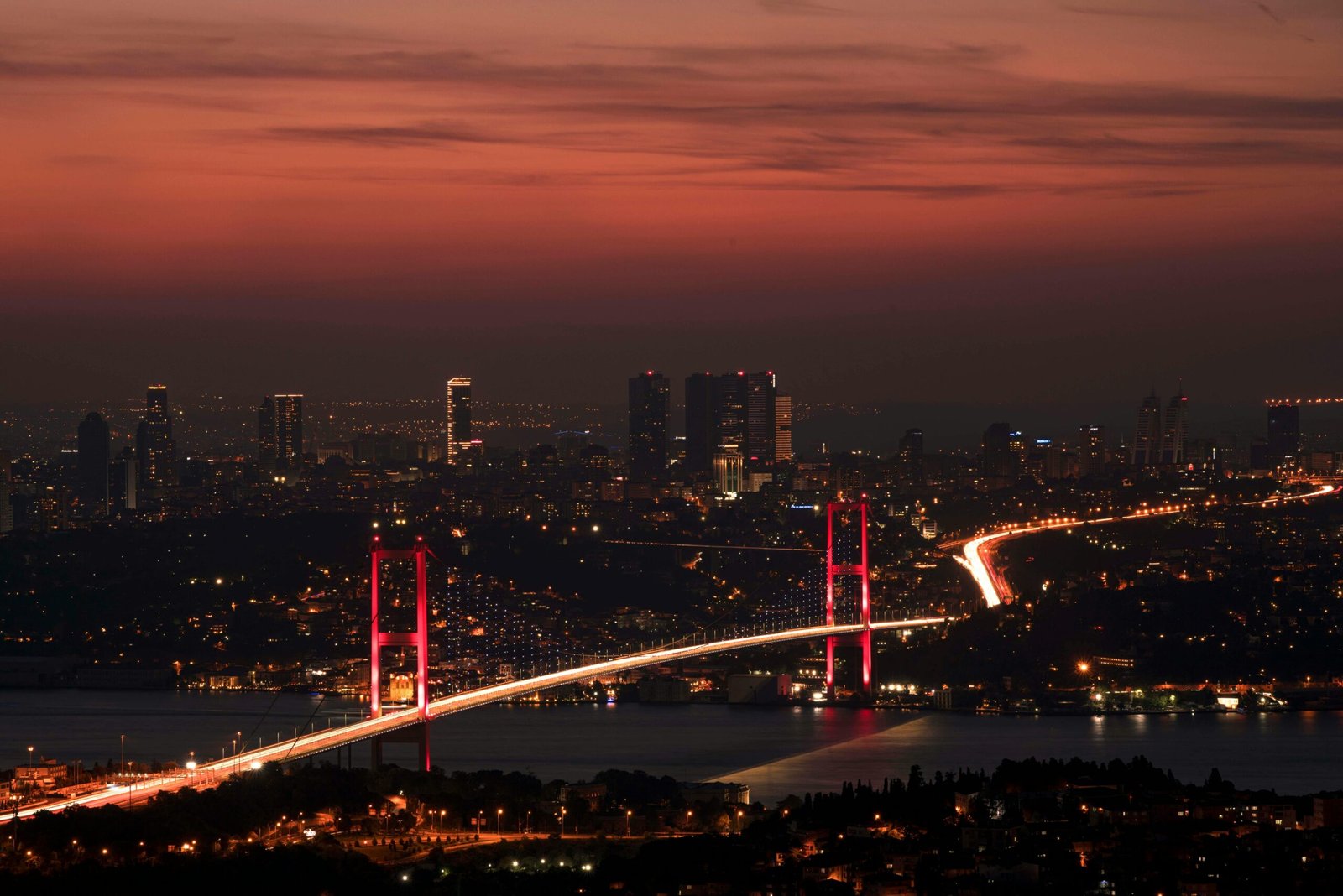
The global real estate landscape has undergone a tectonic shift over the last 24 months. As traditional European markets face stagnation and high interest rates, the Mediterranean basin—led by Turkey—has emerged as a “Capital Magnet.” In 2026, Turkey is no longer just an emerging market; it is a mature, multi-faceted investment destination offering a unique blend of lifestyle security, high-yield potential, and strategic geopolitical positioning.
For the international investor, the “Buy and Hold” strategy of the past has been replaced by “Strategic Asset Allocation.” Whether you are looking for the prestige of the Bosphorus, the tech-driven growth of the Aegean, or the logistical goldmine of the eastern Mediterranean, Turkey offers a specific “Safe Harbor” for every type of capital.
Table of Contents
I. The Macro-Economic Context: Why Turkey in 2026?
To understand the 2026 real estate surge, one must look past the superficial headlines and examine the structural transformation of the Turkish economy over the last decade. We are no longer discussing a speculative “emerging market” prone to wild swings; we are witnessing the emergence of a stabilized, mid-latitude economic powerhouse that has successfully navigated the global inflationary storms of the early 2020s. The “Why Turkey” question in 2026 is answered by a triad of factors: monetary orthodoxy, regional hegemony, and a demographic dividend that is now reaching its peak productivity.
1. The Post-Volatility Equilibrium: Monetary Orthodoxy as a Bedrock
The most significant shift for the 2026 investor is the predictability of the Turkish Lira. Between 2021 and 2024, the primary barrier for foreign capital was currency risk—the fear that rental yields or capital gains would be swallowed by devaluation. However, the Turkish Central Bank’s unwavering commitment to orthodox monetary policy since late 2023 has finally created a “soft landing.”
By early 2026, stabilized inflation and a methodical decline in interest rates have triggered a significant property boom. This ‘Interest Rate Pivot’ has effectively reopened the local mortgage market for the first time in years—a true game-changer for foreign investors. When investing in Istanbul or Antalya today, your exit strategy is no longer confined to international buyers. Instead, you hold an asset sought after by a credit-ready Turkish middle class, providing a layer of internal liquidity and a safety net rarely found in other Mediterranean markets.
2. The “Levantine Bridge”: Turkey as the Regional Reconstruction Boardroom
Geopolitics in 2026 has shifted from conflict to commerce. As the massive, multi-decade reconstruction efforts in the Levant—specifically Syria and Iraq—gain international momentum and multi-billion dollar funding, Turkey has solidified its position as the logistical and administrative headquarters for these projects.
This has created a “White-Collar Migration” of unprecedented scale. International NGOs, engineering conglomerates, and global consulting firms have chosen Turkey—specifically the corridor stretching from Gaziantep and Hatay to Mersin and Istanbul—as their operational base. This influx isn’t looking for budget housing; they are demanding high-security, Grade-A commercial spaces and luxury residential units with Western-standard amenities.
In 2026, Turkey is effectively the “Singapore of the Middle East.” It offers the legal framework, the banking infrastructure, and the lifestyle security that the surrounding region currently lacks. For a real estate investor, this translates to institutional-grade rental demand. We are seeing 5-to-10-year corporate leases becoming the norm in key hubs, providing the kind of stable, “boring” cash flow that institutional REITs (Real Estate Investment Trusts) crave.
3. The Digital Nomad Revolution and the “New Residency” Paradigm
While the $400,000 Citizenship by Investment (CBI) program continues to be a robust driver for UHNW (Ultra-High-Net-Worth) individuals, the 2026 market is being equally shaped by the Digital Nomad Visa. Turkey was quick to recognize the permanent shift toward remote work and tailored its residency permits to attract the world’s most mobile and productive talent.
By 2026, it is estimated that over 1.2 million high-income remote workers are residing in Turkey at any given time. These are not backpackers; they are tech professionals from London, Berlin, Dubai, and New York who are trading high taxes and gray skies for the Aegean sun and a significantly lower cost of living without sacrificing fiber-optic connectivity.
This demographic has fundamentally altered the Rental Yield Map. Traditional tourist areas have been transformed into “workation” hubs. The seasonality that used to plague coastal investments has largely vanished. In cities like Izmir and Antalya, the “low season” (November to March) is now filled by digital nomads who prefer the milder climate and quieter streets for their deep-work cycles. This shift has pushed annual yields from a standard 4-5% to a staggering 8-10% in managed residential complexes.
4. Infrastructure: The Invisible Value Multiplier
You cannot talk about the 2026 macro-economic context without mentioning the completion of the “Great Infrastructure Cycle.” Over the last decade, Turkey has invested more in its transport grid than almost any other OECD nation. The 2026 investor is reaping the rewards of:
- The Istanbul Finance Center (IFC): Now fully operational, acting as a magnet for global capital and creating a massive demand for housing on the Anatolian side.
- The High-Speed Rail Expansion: Connecting Ankara, Istanbul, and Izmir in a way that is decentralizing the economy and making “commuter towns” a viable investment strategy.
- The “Green Port” Initiatives: Modernizing the maritime logistics in Mersin and Izmir, which is driving up the value of surrounding industrial and commercial real estate.
5. The “Safe Harbor” Sentiment in a Fragmented World
Finally, we must acknowledge the psychological shift in global capital. In 2026, the world is increasingly fragmented. Traditional “Safe Havens” like London or New York are facing record-high entry costs and social complexities. Turkey, with its independent foreign policy and strategic autonomy, has emerged as a neutral ground—a “Safe Harbor” for capital from the East and the West alike.
Whether it is capital fleeing the over-regulated EU markets or wealth seeking a stable foothold in the Mediterranean, Turkey offers a unique proposition: Sovereignty. The ability to own land and property in a country that is self-sufficient in food, energy-diverse, and militarily capable is a luxury that is becoming increasingly rare.
Summary for the 2026 Investor: The macro-economic thesis for Turkey is no longer based on “buying low and hoping for the best.” It is based on a matured economy that has found its footing. You are investing in a country that is the primary bridge between the stagnant West and the booming East, supported by a stabilized currency and a local demand that is just beginning to flex its muscles.

II. The Top 5 Cities: A Detailed Strategic Analysis
In 2026, the Turkish real estate market is no longer a monolith where “location, location, location” is the only mantra. Today, the sophisticated investor looks for “Utility, Connectivity, and Yield.” The geography of Turkish investment has shifted from a purely aesthetic preference to a data-driven strategic allocation. As the “Sovereign Investment Report” identifies, these five cities represent the pillars of the Eastern Mediterranean’s economic architecture. Each offers a different risk-reward profile, catering to everyone from the risk-averse institutional fund to the high-yield-seeking private equity investor.
1. Istanbul: The Eternal Alpha City and the “Financial Pivot”
Istanbul in 2026 is a city that has successfully bifurcated its identity. While the historic European side remains a cultural magnet, the Anatolian Side (Asia) has claimed the crown for financial dominance. The completion and full integration of the Istanbul Finance Center (IFC) in Ataşehir/Ümraniye has fundamentally rerouted the city’s economic bloodstream.
The “Canary Wharf” of the East:
The IFC isn’t just a collection of skyscrapers; it is a regulatory “Special Zone” that has attracted over 100,000 high-earning finance professionals, legal experts, and fintech innovators. This has created a massive supply-demand imbalance in the surrounding districts. In 2026, the smart money has moved away from the saturated luxury markets of Nişantaşı and toward the “Financial Corridor.”
- Investment Play: We are seeing a 15-20% premium on residential units that offer “Smart Home” integration and are within a 10-minute walk of the IFC metro link. Districts like Ümraniye and Göztepe are no longer “up-and-coming”; they are the blue-chip assets of 2026.
- Infrastructure Synergy: The “Big Istanbul Tunnel” project—a three-story tunnel passing under the Bosphorus—has synchronized the two continents. This has made peripheral districts like Arnavutköy (near the mega-airport) and Kağıthane prime targets for land banking and commercial redevelopment. In Istanbul 2026, you aren’t buying square meters; you are buying “minutes to the hub.”
2. Antalya: The “California” of the Mediterranean and the Tech-Lifestyle Merge
If Istanbul is the financial engine, Antalya is the lifestyle heart of 2026. However, the old “seasonal tourism” model is dead. Antalya has transitioned into a Year-Round Global Hub, driven by the “Sun-and-Work” movement. It is currently the top destination for foreign buyers, with a record-breaking volume of residential transactions.
The Altıntaş Phenomenon:
In 2026, Altıntaş is the most discussed district in the Mediterranean. As the only area with massive, modern urban planning close to both the International Airport and the Lara beaches, it has become a laboratory for “Smart City” living.
- Yield Dynamics: While Istanbul offers long-term stability, Antalya offers aggressive rental yields. The rise of “Branded Residences”—complexes managed by international hotel chains—allows investors to tap into the short-term rental market with zero management overhead. In 2026, these units are seeing net ROI of 11-13%, largely fueled by European and Russian “Climate Refugees” and digital nomads.
- Sustainability as Value: 2026 buyers are obsessed with energy efficiency. Properties in Antalya with “A-Class” energy ratings and solar integration are selling at a 25% faster rate than traditional builds, reflecting a global shift toward ESG (Environmental, Social, and Governance) investing.

3. Bodrum: The Ultra-High-Net-Worth (UHNW) Safe Haven
Bodrum in 2026 has ascended to the same “A-List” status as St. Tropez, Monaco, or Mykonos. It is no longer a real estate market in the traditional sense; it is a Capital Preservation Asset Class. For the world’s elite, a villa in Bodrum is the ultimate “Hedge” against global financial volatility.
The Micro-Economy of Luxury:
The Bodrum market operates independently of the national economy. Whether the Lira is up or down, the “Bay of Bliss” prices are denominated in Euros and Dollars. The focus has shifted from the bustling Yalıkavak Marina to the secluded, ultra-private enclaves of Demirbükü and Cennet Koyu.
- The “Aman” Effect: The presence of global luxury brands like Mandarin Oriental, Aman, and The Edition has created a “Price Floor.” In 2026, a prime waterfront villa in Bodrum is not just a home; it’s a liquid asset that has historically appreciated by 15% annually in hard currency.
- Limited Supply: Strict zoning laws enacted in 2025 have capped new developments, making existing inventory in “Blue Flag” bays incredibly scarce. In 2026, “Scarcity” is the primary driver of value here.
4. Izmir: The Aegean Innovation and Gastronomy Corridor
Izmir is the choice for the “Conscious Investor.” In 2026, it is recognized as Turkey’s greenest and most socially progressive city, attracting a demographic of high-tech entrepreneurs and “slow-living” enthusiasts.
Urla: The Gastronomy Goldmine:
Urla has officially become the “Napa Valley” of the Mediterranean. Its vineyard estates and boutique stone houses have seen a 300% value increase since 2023.
- Tech-Driven Growth: The Izmir Technology Development Zone (IYTE) has turned the city into a magnet for the renewable energy and biotech sectors. This has created a steady demand for high-end suburban living in districts like Güzelbahçe and Mavişehir.
- Logistical Edge: The modernization of the Alsancak port and the high-speed rail link to Istanbul (completed in 2025) have made Izmir a viable “Second Headquarters” for Istanbul-based firms, driving commercial real estate values to historic highs.
5. Mersin: The Industrial Frontier and the “Second Chance” Play
Mersin is the “Secret Value” play of 2026. For investors who feel they “missed the boat” on Antalya’s 2021-2024 surge, Mersin offers a nearly identical trajectory at a 40% discount.
The Gateway to the New Levant:
The opening of the Çukurova International Airport and the massive expansion of the Mersin Free Zone have turned this city into a logistical powerhouse.
- The Reconstruction Hub: As the primary port for the $250B Levantine reconstruction projects, Mersin is flooded with industrial capital. Thousands of international contractors and logistics experts need housing now.
- Investment Play: High-rise residential blocks in Mezitli and Erdemli are the primary targets. These areas offer Mediterranean views and modern amenities at entry prices that are currently the lowest of any major Turkish coastal city. In 2026, Mersin is the “High-Conviction Buy” for those looking for massive capital appreciation over the next five years.
Comparative Strategic Matrix (2026 Data)
| City | Primary Investor Profile | Target Yield (Net) | Appreciation Potential | Risk Profile |
| Istanbul | Institutional / Financial | 6-8% (USD) | High / Stable | Low |
| Antalya | Lifestyle / High-Yield | 10-12% (EUR) | Medium / Fast | Moderate |
| Bodrum | UHNW / Capital Preservation | 3-5% (Asset Focus) | High / Luxury | Very Low |
| Izmir | Tech / Boutique / ESG | 7-9% (TRY/USD) | High / Strategic | Low |
| Mersin | Industrial / Speculative | 9-11% (USD) | Maximum / Early | Moderate |
III. The “Hatay Factor”: A Strategic Note for 2026
For the sophisticated sovereign investor, real estate is less about bricks and mortar and more about the macro-context of the land itself. In 2026, no location in the Eastern Mediterranean is more strategically significant—or more overlooked—than Hatay. While the headlines of 2023 focused on tragedy, the private intelligence of today tracks a ‘Geopolitical Rebirth.’ Hatay now sits at the ‘Triple Nexus’: the intersection of Mediterranean maritime trade, a $250B Levantine reconstruction corridor, and Turkey’s new industrial ‘Amiral Gemisi’ (Flagship) status. Investing in Hatay, or its satellite hubs like Mersin, is a move to secure a seat at the table of the century’s most significant urban and industrial transformation.

1. The Reconstruction Boardroom: Gateway to the Levant
By early 2026, the diplomatic landscape of the Middle East has undergone a profound “Normalization Pivot.” The reopening of the historic land trade corridors through Syria to Jordan and the GCC (Gulf Cooperation Council) countries has placed Hatay back at its historical center as the Gateway to the Silk Road.
For the international investor, this means Hatay is no longer just a province; it is the “Operational Headquarters” for the thousands of firms—from Korean engineering giants to French environmental consultancies—tasked with rebuilding the cities of the Levant.
- The Commercial Surge: There is an insatiable demand for high-end office spaces, secure residential compounds for international staff, and logistics warehouses. In 2026, Hatay is the “Boardroom” where the contracts for the next decade of Middle Eastern growth are being signed.
- The “Dual-Market” Strategy: Smart investors are not necessarily buying residential apartments in Antakya for personal use yet. Instead, they are establishing Commercial Hubs in Hatay while maintaining their luxury residential equity in Antalya or Mersin. This allows for a lifestyle in a mature market while being physically positioned at the doorstep of a high-growth frontier.
2. Infrastructure: The 2026 Connectivity Leap
The year 2026 marks the completion of the “Construction of the Century” in Hatay. The Turkish state, supported by international financing from the EBRD (European Bank for Reconstruction and Development) and the World Bank, has treated Hatay as a laboratory for Resilient Infrastructure.
- The New Hatay International Airport: Completed in early 2026, the airport now features dual-runway capacity and a fortified, disaster-resilient terminal. It has become a critical node for cargo, serving as the air-bridge for high-value components needed for regional industrial projects.
- The Hassa-Dörtyol Tunnel Project: This is the “hidden gem” of 2026. By connecting the industrial heartland of Gaziantep directly to the Port of İskenderun, this tunnel has halved transport times. For an investor, this makes land in the Dörtyol and Payas corridors immensely valuable for industrial logistics and manufacturing facilities.
- Port of İskenderun (LimakPort): Now one of the largest and most technologically advanced ports in the Mediterranean, İskenderun has become the primary exit point for Turkish exports heading to Africa and the Gulf.
3. The “Build Back Better” Alpha: A Modern Urban Canvas
Unlike established cities where investors are limited by existing old-stock buildings, the Hatay of 2026 is being built on a “Smart City” blueprint. The reconstruction of Antakya’s historic center—including the restoration of the Habib-i Neccar Mosque and the Kurtuluş Avenue—has been paired with the development of brand-new, earthquake-resistant residential districts like Dikmece.
- The Investment Opportunity: In 2026, Hatay has surpassed even Istanbul in terms of total project volume and government expenditure. It is the #1 destination for public and private investment in Turkey.
- ESG and Green Urbanism: Because the city is being rebuilt from the ground up, it is the first in the region to fully integrate 2026-standard green energy grids and sustainable water management systems. For institutional investors with strict ESG mandates, Hatay offers a “Clean Slate” that Istanbul’s older districts simply cannot provide.
4. Logistics as a New Asset Class
In the 2026 report, we identify a shift from “Residential” to “Logistics Real Estate” in the Hatay-Mersin axis. With the TIR (International Road Transport) corridors fully operational through Syria, Hatay’s transport fleet—already the second largest in Turkey after Istanbul—is seeing 24/7 activity.
The “Mersin-Hatay Synergy” is the cornerstone of this strategy. While Mersin provides the deep-water port capacity and established urban lifestyle, Hatay provides the Frontline Access. * The Play: Acquiring land or pre-built “Light Industrial” units near the Cilvegözü and Yayladağı border gates. These assets are seeing rental increases that outpace the residential market by a factor of three, driven by the logistics surge to Jordan and the UAE.

5. Risk vs. Reward: The 2026 Reality Check
We must be candid: Hatay is not for the “passive” investor looking for a vacation home. It is a Strategic Play. The risk profile has significantly decreased since 2024 as the infrastructure stabilized, but the “Alpha” (excess return) remains high because the broader international market still perceives it as a recovery zone.
- The Window of Opportunity: 2026 is likely the final year of the “Recovery Discount.” As the city’s new silhouette becomes visible and the international schools and hospitals fully reopen, the entry prices will inevitably align with those of Mersin and Adana.
Strategic Conclusion on the Hatay Factor: Hatay in 2026 is the physical embodiment of Turkey’s “Middle Power” ambition. It is where the nation’s industrial might meets its humanitarian and geopolitical influence. For the investor, Hatay is the “Force Multiplier” in a Turkish portfolio. By holding assets here, you are not just betting on real estate; you are betting on the stabilization and economic integration of the entire Middle East.
IV. Practical Guide: The “2026 Acquisition Framework”
In 2026, the Turkish real estate acquisition process has transitioned from a traditional, paperwork-heavy system to a high-speed “Digital First” infrastructure. For the international investor, this means more security, less ambiguity, but also a requirement for stricter compliance. The era of “informal valuations” or “flexible price declarations” is officially over. Today, every transaction is monitored by integrated AI systems that link the Land Registry (Tapu), the Central Bank, and the Tax Office in real-time.
1. The Legal Roadmap: From Selection to Ownership
The 2026 framework is designed to protect the buyer as much as the state. Here is the step-by-step evolution of a standard acquisition:
A. The “GEDAŞ” Valuation (The New Gold Standard)
As of early 2026, the Turkish government has fully implemented the GEDAŞ (Real Estate Valuation Center) system. Before a sales contract can even be drafted, an independent, government-approved appraisal is mandatory.
- The Change: Gone are the days when a property could be sold for $500,000 but declared as $200,000 on the deed to save on taxes. The GEDAŞ system ensures the “Market Value” and the “Deed Value” are identical. This is crucial for those seeking citizenship, as it guarantees that your $400,000 investment is officially recognized and audit-proof.
B. The DAB Certificate: Currency Conversion Protocol
Every foreign investor must now obtain a DAB (Döviz Alım Belgesi). You are required to transfer your foreign currency (USD, EUR, GBP) to a Turkish bank, which then sells it to the Central Bank of Turkey (CBRT) at the official rate. The bank issues a DAB certificate, which is the “ticket” required to process your title deed. In 2026, this process is instantaneous and handled through a digital bridge between banks and the Land Registry.
C. Web-Tapu and Biometric Integration
The final transfer no longer requires hours of waiting at a government office. Through the Web-Tapu portal, most of the due diligence—checking for liens, mortgages, or zoning issues—is done digitally. In 2026, many investors complete the process via Biometric Verification or through a Power of Attorney (POA) managed by specialized law firms, never having to step foot in a Land Registry office until they receive their keys.
2. The $400,000 Threshold: Citizenship & Residency in 2026
Turkey’s Citizenship by Investment (CBI) program remains the most sought-after in the region, but the rules have matured:
- The Amount: The minimum investment remains $400,000, despite rumors of an increase to $600,000.
- The “3-Year Pledge”: You must legally commit to holding the property for at least three years. In 2026, this restriction is digitally “locked” on your title deed, preventing any accidental or unauthorized sale.
- The $200,000 Residency Threshold: For those not seeking full citizenship, a new $200,000 minimum is required for a Real Estate-based Residence Permit. This ensures that the “Residency Market” remains high-quality and sustainable.
3. The 2026 Tax Environment: Navigating the “Foreigner Tariff”
One of the most significant updates in 2026 is the new Property Tax Package. While Turkey remains more tax-efficient than Spain or Greece, investors must budget for the following:
| Tax / Fee Type | 2026 Rate / Structure | Strategic Note |
| Title Deed Fee (Tapu Harcı) | 4% of Declared Value | In 2026, custom dictates the buyer pays the full 4%. |
| Value Added Tax (KDV) | 1% to 20% | Foreigners are often exempt if it’s their first purchase and funds come from abroad. |
| The “Foreigner Admin Fee” | ~21,000 TL | A fixed administrative fee for foreign-national transactions. |
| Annual Property Tax | 0.2% (Metropolitan) | Very low compared to EU standards; calculated on the new 2026 valuation base. |
The 5-Year Capital Gains Rule: If you hold your property for more than five years, you are 100% exempt from Capital Gains Tax upon resale. For the “Buy and Hold” sovereign investor, this makes Turkey one of the most profitable exit-markets in the world.
4. The Rise of “Green” and “Earthquake-Resilient” Compliance
In 2026, the “Iskan” (Habitation License) is no longer the only document investors check. We are seeing the emergence of the YeS-TR (Turkish Green Building Certificate) as a major value driver.
- Why it matters: Properties with high energy-efficiency ratings and modern earthquake-resilient engineering (post-2024 standards) are seeing a 30% higher resale value.
- The Audit: 2026 buyers are increasingly hiring private “Structural Audit” firms to verify the building’s integrity before the deposit is paid. In the Sovereign Investment landscape, “Safe” is the new “Luxury.”
5. Managing Your Asset: The 2026 Rental Market
Managing a property from 5,000 miles away has never been easier. The 2026 market is dominated by Professional Property Management Firms. * The Yield Play: Investors are moving away from traditional long-term leases and toward “Managed Short-Term Units.” These are fully serviced apartments that utilize AI-driven pricing (like Airbnb but professionalized) to maximize yields during peak seasons in Antalya and Istanbul.
- Legal Compliance: In 2026, all short-term rentals must be registered with the Ministry of Culture and Tourism. Non-compliance carries heavy fines, so the “Practical Guide” recommendation is to always use a licensed management agency.
Summary Checklist for the 2026 Buyer:
- Select a GEDAŞ-Compliant Property: Ensure the asking price matches the likely official appraisal.
- Appoint a Specialized Lawyer: Do not use the developer’s lawyer. Independence is your greatest shield.
- Execute the DAB Conversion: Ensure your bank follows the Central Bank’s digital protocol for the currency purchase certificate.
- Verify the “Green” Status: Look for YeS-TR or LEED certifications to future-proof your exit strategy.
- Secure the Title Deed (Tapu): Use the Web-Tapu system for a fast, digital transfer of ownership.

V. Frequently Asked Questions (FAQ)
Is 2026 a good time to buy, or should I wait?
In real estate, “waiting” usually means paying for the next guy’s profit. With the Turkish Lira stabilized and the regional reconstruction beginning, we are at the start of a 5-year growth cycle. 2026 is the “Sweet Spot” for entry.
Can I get Turkish Citizenship through multiple properties?
Yes, as long as the total value exceeds $400,000 and the applications are submitted together. Many investors buy two apartments in Antalya—one to live in and one to rent out.
What are the “Hidden Costs” of owning property in Turkey?
Beyond the purchase price, you should budget for the “Aidat” (Monthly Maintenance Fee). In luxury complexes with pools and security, this can range from $50 to $200 per month. Annual property tax is very low, typically 0.1% to 0.2%.
Why is Hatay mentioned as a strategic location?
Hatay is the gateway to the $250B Syrian reconstruction. While the residential market there is still recovering, it is the primary base for international firms. Smart investors use Hatay as a “Business Bridge” while keeping their “Equity” in established cities like Istanbul or Antalya.
Which city has the highest Airbnb potential?
Antalya (Altıntaş) and Istanbul (Beyoğlu/Kağıthane). Antalya offers summer-peak yields, while Istanbul offers consistent year-round occupancy from business travelers and medical tourists.
IV. Conclusion: The Future is Mediterranean
As we conclude The 2026 Sovereign Investment Report, one reality stands clearer than ever: the center of gravity for global real estate has shifted. The era of over-leveraged, low-yield investments in the cooling markets of Northern Europe is being replaced by a new, dynamic era of “Mediterranean Resurgence.” At the heart of this resurgence lies Turkey—a nation that has successfully navigated its transition from a volatile emerging market to a matured, strategic investment powerhouse.
In 2026, investing in Turkish real estate is no longer a speculative “bet” on currency swings; it is a calculated move into a high-utility, high-liquidity asset class. Whether it is the institutional-grade office spaces in Istanbul’s new Finance Center, the high-yield “smart city” complexes of Antalya’s Altıntaş, or the capital-preservation fortresses of Bodrum’s elite bays, Turkey offers a diversified portfolio that few other nations can match.
The 2026 Strategic Advantage: Why Now?
If the early 2020s were defined by uncertainty, 2026 is defined by infrastructure and integration. The reopening of the Levantine trade corridors, the full operationalization of the Istanbul Finance Center, and the technological revolution in the Land Registry (Web-Tapu) have created an environment of unprecedented transparency and growth.
For the international investor, the message is clear:
- The “Exit” is Secure: With a robust domestic middle class and a transparent digital resale market, your liquidity is guaranteed.
- The Yield is Real: Driven by digital nomads, international consultants, and a booming services sector, rental returns have decoupled from inflation, providing genuine “hard currency” value.
- The Context is King: By positioning yourself in the Mersin-Hatay-Antalya axis, you are holding the “Real Estate Keys” to the largest reconstruction and logistical expansion in modern history.
Final Thought: The Window of Opportunity
History shows that in real estate, the highest returns belong to those who see the infrastructure before the skyline. In 2026, the infrastructure is already here—the metro lines are running, the airports are open, and the legal frameworks are solidified. The “Recovery Phase” is nearing its peak, and as the Turkish Lira continues its path of stability, the “entry discount” that made 2024 and 2025 so lucrative is narrowing.
The “Turkish Dream” of 2026 is no longer a dream; it is a tangible, data-backed reality. You aren’t just buying property; you are buying a stake in the most strategically significant corridor of the next decade. The Mediterranean is calling, and for the sovereign investor, all roads lead to Turkey.