





















Türkiye is accelerating its clean transition through coordinated market mechanisms, policy commitments, and structured investment frameworks designed to satisfy rising power consumption. Minister of Energy and Natural Resources Alparslan Bayraktar has called for the preparation of the 2026 renewables auction round while pledging to speed up buildout schedules across the country. Supported by a newly unveiled national green energy finance strategy and favorable assessments from the International Energy Agency (IEA), the nation is increasingly positioning itself as a vital green energy corridor between Europe and Asia.
Accelerated Buildouts and the 2026 Renewables Auction Round
The announcement of the 2026 renewables auction round marks a pivotal phase in the execution of the turkiye green energy policy framework. By setting direct target timelines for competitive bidding, energy authorities aim to provide clear project visibility for domestic and international utility developers. Minister Bayraktar’s vow to speed up project buildouts highlights a systemic focus on reducing development bottlenecks, streamlining grid connections, and shortening the transition time between auction allocation and commercial power generation.
Renewable auction rounds serve as the primary vehicle for allocating large-scale solar, wind, and alternative clean energy capacity. Competitive bidding ensures that power purchasing agreements remain economically efficient while driving technological adoption across regional generation hubs. The emphasis on acceleration addresses both immediate generation needs and long-term decarbonization targets, encouraging continuous equipment procurement and project engineering activities ahead of the 2026 allocation window.
To support this accelerated pace, policy directives focus on improving developer certainty through predictable allocation schedules. Transparent auction procedures allow capital providers and engineering firms to optimize supply chains, secure equipment, and mobilize civil construction assets well in advance. This structured approach directly mitigates market volatility and establishes a sustained operational pipeline for large-scale infrastructure investments.
National Green Energy Finance Strategy and Capital Deployment
Unveiling the national green energy finance strategy provides the structured funding architecture required to back ambitious buildout targets. Infrastructure scale-up on this magnitude demands coordinated capital channels, combining state-backed facilitation, domestic bank liquidity, and international capital markets. The national finance framework establishes dedicated criteria for green instruments, aiming to streamline debt financing, project equity, and specialized funding structures for utility-scale developments.
By establishing explicit green finance guidelines, the strategy simplifies the alignment between institutional investors and clean energy project developers. Standardized financial criteria help reduce capital costs and facilitate cross-border investment flows into transmission infrastructure, generation assets, and energy storage deployments. This alignment is critical as capital requirements grow alongside expanding auction capacity and grid enhancement projects.
The financial strategy also acts as a risk mitigation framework for long-term project bankability. Clear rules regarding green capital deployment foster investor confidence, encouraging broader participation from multilateral development banks, private equity funds, and commercial lenders. This financial backdrop reinforces the physical buildout plans set forth in government auction announcements, creating a unified path for continuous capacity addition.
Practical Implications for Businesses, Buyers, and Investors
For corporate buyers, industrial power consumers, and international sourcing partners, the expansion of the turkiye green energy ecosystem offers enhanced long-term power security and clearer sustainability compliance pathways. As commercial operations face tighter global carbon reporting requirements, access to locally generated renewable electricity becomes a core component of supply chain competitiveness. The accelerated auction schedule ensures a continuous supply of clean power entering the national grid.
Project developers and capital providers gain a highly predictable regulatory baseline. The structured lead time ahead of the 2026 renewables auction round gives investors sufficient room to conduct environmental impact assessments, secure land rights, and organize technology partnerships. Furthermore, the national green finance strategy opens clearer pathways to access lower-cost, sustainability-linked debt, improving overall project returns and operational viability.
Industrial manufacturers operating in Türkiye stand to benefit from grid decarbonization efforts. A lower carbon intensity across the national power mix directly aids exporters in satisfying international carbon adjustment mechanisms and environmental standards. Consequently, green energy expansion acts not only as an environmental milestone but also as an economic safeguard for manufacturing and export sectors reliant on clean grid inputs.
Connecting Markets: Türkiye as a Regional Energy Corridor
Strategic Position Linking Europe and Asia
Türkiye is increasingly recognized as a rising green energy corridor linking European and Asian energy markets. Its strategic geography provides an ideal bridge for cross-border power transmission, technology transfer, and regional energy interconnections. As both continents intensify their transition efforts, cross-border energy flows become critical for balancing regional power grids, managing peak demand variations, and optimizing cross-border energy trading.
IEA Review: Leveraging Energy Foundations for Rising Demand
A comprehensive review by the International Energy Agency (IEA) highlights that Türkiye can successfully build upon its strong baseline energy foundations to meet continually rising demand. The IEA analysis confirms that existing institutional structures, system operation capabilities, and power grid foundations provide a firm launching pad for integrating higher proportions of variable renewable power. Balancing expanding industrial demand with environmental targets requires utilizing these established foundations while expanding transmission capability.
On-the-Ground Commitments and Wind Assets
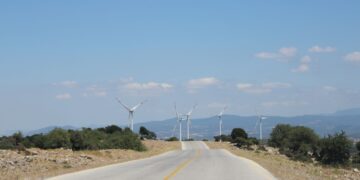
Tangible renewable generation assets, such as wind deployments including the Turkey Hill wind turbines, serve as practical reminders of this broader clean energy commitment. Utility-scale wind installations highlight the operational reality of national policies, demonstrating how physical equipment generates clean power to feed growing regional grids. These assets showcase the practical deployment of wind turbine technology, illustrating the structural shift toward reliable, low-carbon power production.
Strategic Outlook and Regional Integration
The convergence of accelerated auction rounds, formalized green finance mechanisms, and strong baseline grid capabilities positions the national energy sector for sustained structural growth. Accelerating the deployment timeline ensures that additional generation capacity comes online in parallel with rising national power demand. This integrated approach minimizes reliance on imported conventional fuels while expanding clean power capacity for domestic use and potential regional trade.
Looking ahead toward 2026 and beyond, the integration of national finance frameworks with regional corridor infrastructure will likely enhance Türkiye’s standing in international clean energy networks. Continued policy execution, transparent competitive auctions, and active market involvement position the clean energy market as an essential contributor to regional energy security and cross-border clean technology integration.
Frequently Asked Questions
What key decision was recently made regarding renewable energy auctions in Türkiye?
Energy Minister Alparslan Bayraktar issued a call for the 2026 renewables auction round while committing to accelerate the overall buildout of clean energy infrastructure.
What is the purpose of the newly unveiled national green energy finance strategy?
The national green energy finance strategy provides a structured capital framework to streamline domestic and international investments, reduce capital costs, and finance green infrastructure projects.
How does the IEA view Türkiye’s ability to meet its energy needs?
A recent IEA review stated that Türkiye can build on its strong energy foundations to meet rising power demand while transitioning toward cleaner generation sources.
Why is Türkiye considered a rising green energy corridor?
Its geographical position enables it to serve as a strategic bridge between Europe and Asia for energy transmission, cross-border electricity flows, and regional clean energy trade.
How do renewable auction rounds benefit international investors and developers?
Competitive auction rounds offer transparent bidding processes, clear off-take frameworks, and predictable project timelines, making utility-scale developments more bankable for long-term investors.
Sources
- Turkey calls to 2026 renewables auction round as Bayraktar vows to speed up buildout – Balkan Green Energy News
- Türkiye can build on strong energy foundations to meet rising demand, new IEA review says – IEA – International Energy Agency
- Türkiye unveils national green energy finance strategy – Hürriyet Daily News
- Turkey Hill wind turbines a bold reminder of green energy commitment [Lancaster Watchdog] – LancasterOnline
- Türkiye seen as rising green energy corridor between Europe, Asia – Daily Sabah
Related Reading
- Turkey Green Energy Strategy: 2040 Electrification & Finance
- From Startups to Turcorns: Türkiye’s Tech Ecosystem Attracts $5.1 Billion
- 92 Hubs for Innovation: Türkiye’s Technoparks Lead the Digital Economy
Looking to Source or Invest in Turkey?
Navigating suppliers, regulations and market entry in Turkey can be complex for international businesses. Burç Consulting provides on-the-ground sourcing, investment feasibility and market entry support for companies working with Turkey. Get in touch with our team to discuss your project.