


















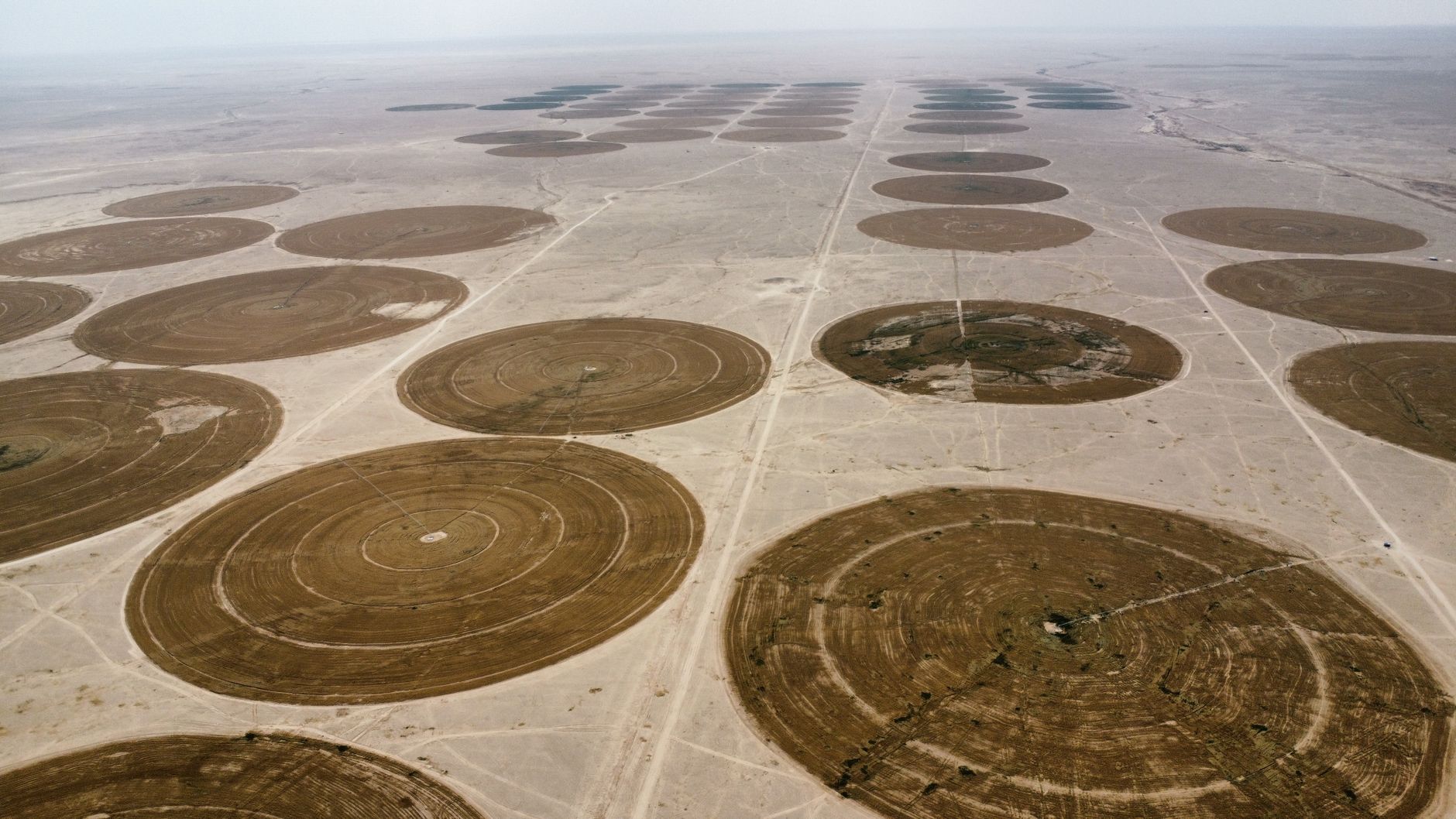
The Turkish agricultural sector is operating at a critical intersection of intense climate pressures, high economic volatility, and evolving international trade dynamics. Recent industry reports reveal that Turkey ranks fourth globally in food inflation, placing significant pressure on domestic food producers, sourcing networks, and commercial supply chains. Concurrently, severe and prolonged droughts are transforming the Turkish landscape, manifesting in the formation of massive sinkholes across rural farming regions. Despite these serious environmental and macroeconomic headwinds, international trade and investment channels remain active, underscored by a recent high-level meeting where an agriculture minister discussed new investment opportunities with a visiting Turkish business delegation. Understanding these complex conditions—alongside global benchmark insights from agricultural research institutions and specialized farming communities—is essential for foreign investors, procurement managers, and agribusiness executives evaluating Turkish agricultural investment opportunities.
Environmental Realities: Droughts and Sinkholes Reshaping the Turkish Landscape
The physical conditions underpinning Turkish agriculture are undergoing fundamental shifts due to severe weather patterns and changing hydrological balances. According to reporting from the BBC, persistent droughts are transforming the Turkish landscape, directly causing the appearance of massive sinkholes in key rural regions. As underground water reservoirs dry up due to sustained precipitation deficits and elevated agricultural irrigation demands, subterranean caverns collapse, leaving large structural voids across agricultural terrain. These physical disruptions pose severe operational hazards to field preparation, crop cultivation, harvesting machinery, and rural infrastructure.
For commercial buyers and international sourcing managers, the environmental degradation of arable land presents direct operational risks. Persistent drought conditions restrict water availability for key cash crops, ultimately impacting overall yield volume, crop quality, and delivery consistency. The emergence of massive sinkholes further complicates farm management, creating unexpected land use barriers and endangering heavy agricultural equipment during planting and harvesting operations. As water scarcity intensifies, agricultural producers must weigh the capital costs of deep-well extraction, advanced drip irrigation systems, and soil preservation against shrinking profit margins. Sourcing partners evaluating long-term supply agreements in Turkey must account for these environmental vulnerabilities when assessing producer capacity, farm-level resilience, and regional supply chain stability.
Economic Pressures: Assessing Food Inflation in Turkey
Alongside severe climate stress, Turkey’s agri-business ecosystem is navigating intense macroeconomic headwinds. As reported by Bianet, Turkey ranks fourth globally in food inflation, reflecting extraordinary price growth across food supply chains and basic agricultural commodities. High food inflation creates complex challenges for farm operators, processors, exporters, and international buyers alike. Soaring domestic food prices erode purchasing power, inflate farmgate costs, and increase operational expenditures across every stage of the agricultural value chain, from seed purchasing and soil fertilization to storage, processing, and transportation logistics.
The elevated rate of food inflation severely complicates long-term financial planning and contract negotiation within the Turkish agricultural sector. Input costs—including fuel, power, packaging materials, and agricultural machinery maintenance—have experienced substantial upward pressure, forcing producers to continually recalibrate pricing structures. For foreign investors and international procurement directors, navigating this inflationary landscape requires sophisticated contract structuring and precise currency hedging strategies. While rising domestic prices can squeeze operational margins for local processors, international buyers sourcing from Turkey may find opportunities to structure export agreements that leverage foreign exchange differentials. However, sustained domestic food inflation also heightens the risk of trade policy adjustments, market intervention, or shifting domestic supply prioritization as authorities seek to stabilize food accessibility.
International Investment Opportunities and Cross-Border Partnerships
Despite the challenges posed by environmental pressures and elevated domestic food inflation, Turkish commercial enterprises continue to actively pursue global trade expansion and cross-border partnerships. Highlighted by Daily News Egypt, an agriculture minister recently held formal talks with a Turkish business delegation to explore mutually beneficial investment opportunities in the agricultural domain. These discussions emphasize the ongoing global appetite for Turkish agricultural expertise, technology integration, commercial investment, and joint-venture projects in foreign markets.
Cross-border discussions between government leaders and Turkish business delegations highlight a strategic pathway for agribusiness diversification. By investing in overseas agricultural ventures, Turkish agribusinesses can secure alternative sourcing channels, expand their commercial footprint, diversify climate risk, and establish reliable supply corridors for essential commodities. For foreign governments and partner nations, collaborating with Turkish business delegations provides access to established commercial networks, specialized food processing capabilities, and experienced agricultural trade operators. These international investment dialogues serve as a pivotal bridge, enabling Turkish companies to hedge against domestic environmental and economic pressures while offering international partners structured investment opportunities in food production, storage infrastructure, and cross-border agricultural logistics.
Comparative Agricultural Models: University Research and Communal Farming Innovations
To contextualize the operational hurdles faced by Turkish producers, agribusiness stakeholders frequently look to global benchmarks in agricultural innovation, research, and production models. Coverage from U of G News details how research initiatives at the University of Guelph (U of G) actively help put food on harvest plates through scientific advancement, crop optimization, and sustainable farming methods. In parallel, reporting from the Mitchell Daily Republic highlights the significant agricultural contributions of Hutterites in South Dakota, showcasing how tightly knit communal farming structures achieve high levels of operational efficiency, resource pooling, and yield consistency.
Institutional Research and Yield Optimization
Academic research institutions play a vital role in protecting food production systems against climate volatility, soil degradation, and resource shortages. As demonstrated by the University of Guelph’s efforts in contributing directly to harvest plate food security, institutional research provides critical solutions in plant breeding, drought-resistant crop varieties, precision agriculture technologies, and soil preservation techniques. For the Turkish agricultural investment landscape, fostering stronger links between academic research centers, agronomic institutions, and private producers could offer critical tools to combat drought-induced land degradation and improve crop resilience amidst changing weather patterns.
Communal Agriculture and Regional Contributions
Similarly, the structural models utilized by distinct farming communities, such as the Hutterites’ agricultural contributions in South Dakota, illustrate the commercial advantages of collective resource management, labor coordination, and shared capital investments. The Hutterite model demonstrates how structured communal agriculture can enhance scale economies, lower per-unit production costs, and maintain robust agricultural output even in challenging economic environments. As Turkish producers confront mounting economic pressure from global food inflation and land challenges caused by massive sinkholes, adopting elements of cooperative resource sharing, centralized equipment pooling, and shared processing facilities could significantly enhance operational efficiency across regional farming networks.
Strategic Outlook and Implications for Agri-Business Sourcing
Looking ahead, the convergence of climate instability, severe food inflation, and expanding international trade delegations presents a complex landscape for stakeholders involved in Turkish agricultural investment and sourcing. The transformation of arable land through drought and massive sinkholes highlights the urgent necessity for modern irrigation infrastructure, advanced soil management, and climate-adapted agronomy. At the same time, Turkey’s high global ranking in food inflation underscores the need for resilient financial risk management, transparent pricing models, and agile supply chain logistics to safeguard commercial profit margins.
For international buyers, corporate investors, and institutional sourcing directors, successfully navigating the Turkish market requires a multi-faceted approach. Primary strategies must include conducting rigorous site-level environmental assessments to gauge localized drought exposure and soil stability, alongside structuring flexible commercial contracts capable of absorbing inflationary shifts. Furthermore, tracking cross-border commercial ventures—such as the recent agricultural investment discussions between the Egyptian agriculture minister and the Turkish business delegation—provides critical foresight into where capital, technology, and trade flows are moving. By combining rigorous physical risk management with sound macroeconomic planning, agribusiness stakeholders can capitalize on Turkey’s robust processing capabilities and strategic location while effectively mitigating environmental and economic volatility.
Frequently Asked Questions
What are the primary climate challenges currently affecting Turkish agriculture?
Persistent droughts are significantly altering the landscape in Turkey, leading to severe water scarcity and the formation of massive sinkholes across agricultural land, which creates hazards for farm equipment, field stability, and crop productivity.
How high is food inflation in Turkey according to global rankings?
According to reporting from Bianet, Turkey ranks fourth globally in food inflation, reflecting substantial cost increases across domestic agricultural inputs, farmgate pricing, and retail food distribution.
Are Turkish agribusinesses actively engaged in international investment discussions?
Yes, as reported by Daily News Egypt, an agriculture minister recently conducted discussions with a visiting Turkish business delegation to explore mutually beneficial agricultural investment opportunities.
How do institutional research programs contribute to agricultural resilience?
As demonstrated by coverage from U of G News regarding the University of Guelph, academic research helps improve food availability on harvest plates by advancing crop research, yield optimization, and sustainable soil and farm management practices.
What can commercial agriculture learn from communal farming models like the Hutterites in South Dakota?
The agricultural contributions of Hutterites in South Dakota show how communal resource sharing, coordinated equipment utilization, and structured labor organization can improve operational efficiency and lower per-unit production costs.
How should international buyers adjust their procurement strategies when sourcing from Turkey?
Procurement managers should evaluate local environmental risks related to drought and sinkholes, implement flexible contracting mechanisms to accommodate food inflation, and monitor international investment partnerships to secure reliable supply lines.
Sources
- How U of G Helps Put Food on Your Harvest Plate – U of G News – U of G News
- What are Hutterites’ agricultural contributions in South Dakota? – Mitchell Daily Republic
- Droughts are transforming the Turkish landscape with massive sinkholes – BBC
- Agriculture minister discusses investment opportunities with Turkish business delegation – Dailynewsegypt
- Turkey ranks fourth globally in food inflation – Bianet
Related Reading
- Türkiye’s Tomato Exports Hit $401 Million in 2025 Amid Shifting Global Demand
- Turkish Honey Exports Reach $33.5 Million in 2025 as Global Demand Swells
- Grains & Pasta: Turkey’s Milling Power & Bulgur Dominance
Looking to Source or Invest in Turkey?
Navigating suppliers, regulations and market entry in Turkey can be complex for international businesses. Burç Consulting provides on-the-ground sourcing, investment feasibility and market entry support for companies working with Turkey. Get in touch with our team to discuss your project.