Setting Up a Factory in Turkey: Guide
A comprehensive operational guide detailing zoning, legal structures, environmental permitting, construction compliance, and cost variables for establishing a manufacturing plant in Türkiye.
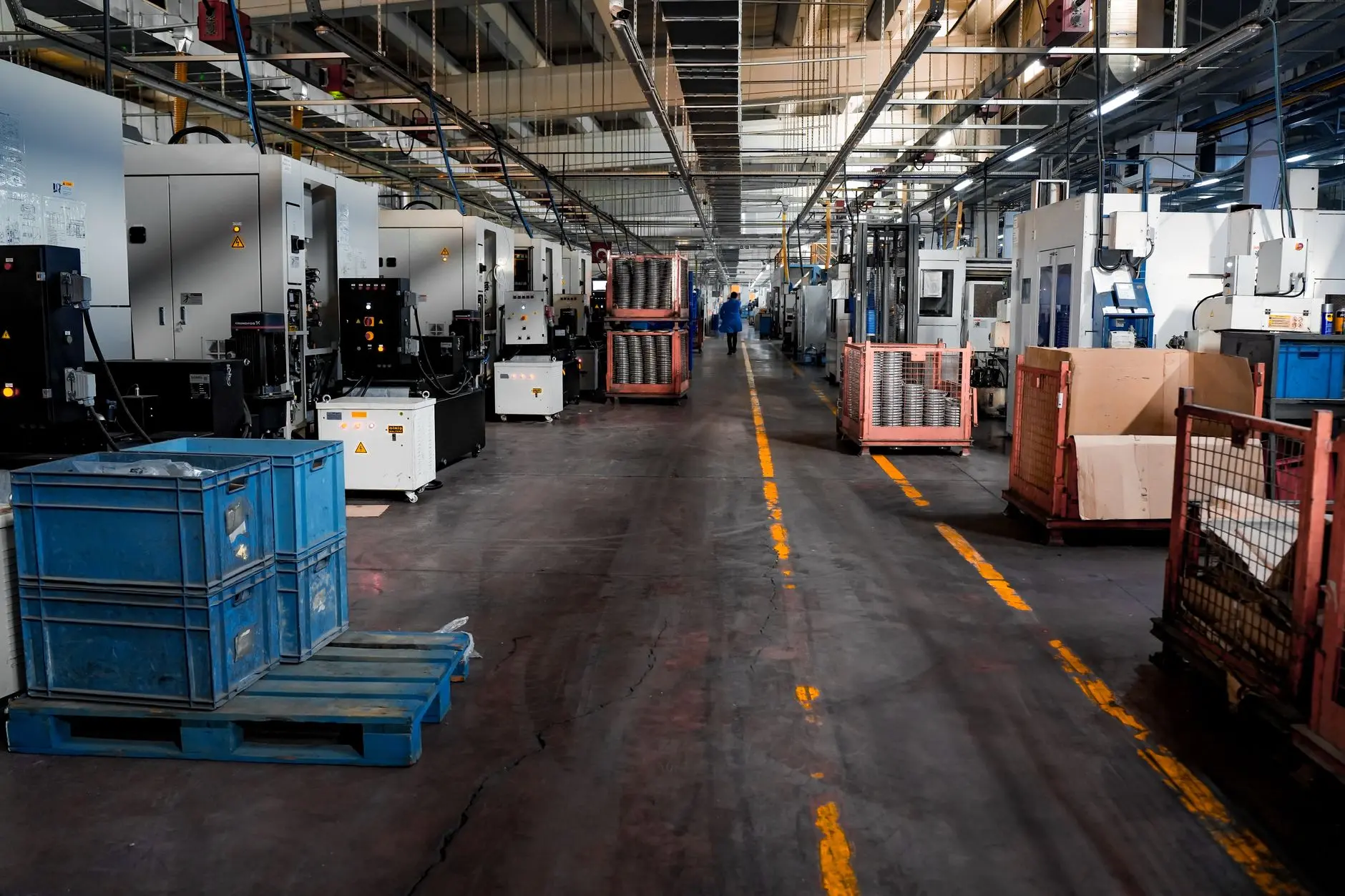
Establishing a manufacturing plant in Türkiye offers foreign industrial groups direct customs-free access to the European Union market, integrated domestic supply chains, and competitive labor pools. Successfully navigating the setup process requires choosing between specialized industrial parks or independent land, securing sequential environmental and municipal permits, and incorporating a domestic corporate structure. With careful pre-feasibility work and adherence to regulatory stages, foreign manufacturers can commission compliant facilities within predictable operational timelines.
Key takeaways
- Selecting an Organized Industrial Zone (OSB) significantly reduces bureaucratic friction because the zone administration acts as a single-window authority for zoning, infrastructure connections, and building permits.
- Environmental compliance is non-negotiable: obtaining either an Environmental Impact Assessment (EIA) positive decision or an EIA exemption certificate must precede building permits and construction activity.
- Capital requirements and operational expenditures vary widely by geographic region, heavily influenced by regional investment incentive tiers managed by the Ministry of Industry and Technology.
- Trial production and workplace opening licenses require synchronized safety, fire, labor, and municipal sign-offs before full-scale commercial manufacturing may legally commence.
Strategic Site Selection: Industrial Zones vs. Independent Land
The choice of where to place physical operations determines both long-term logistics efficiency and administrative overhead. Türkiye divides industrial land into organized clusters and standalone parcels, each carrying distinct regulatory implications.
Organized Industrial Zones (OSB)
Organized Industrial Zones (Organize Sanayi Bölgeleri) represent the most common and efficient choice for foreign industrial investors. These dedicated districts offer pre-zoned land plots, pre-installed utilities (natural gas, high-capacity electrical grids, water networks, and industrial waste treatment), and dedicated road infrastructure.
Administratively, OSBs operate under delegated authority. The zone management board can issue construction permits, verify engineering plans, and grant operational licenses without requiring multiple separate visits to municipal and provincial offices. In addition, purchasing land or operating within an OSB often confers exemption from municipal property taxes for designated initial periods, as well as reduced water and telecommunications fees.
Related guide:OEM Manufacturers in Turkey: OEM vs ODM Guide
Free Zones and Endustri Bölgeleri
For operations oriented primarily toward re-exporting outside Türkiye or utilizing imported raw materials subject to complex tariff structures, Free Zones (Serbest Bölgeler) provide specific customs regimes. Manufacturing inside a Turkish Free Zone allows corporate income tax exemptions on export production and value-added tax (VAT) relief on imported equipment.
Alternatively, Specialized Industrial Zones (Endüstri Bölgeleri) cater to massive, capital-intensive investments in strategic sectors such as petrochemicals, large-scale automotive assembly, and renewable technology production, offering bespoke government approvals and fast-tracked land allocations.
Independent Private Land
Acquiring standalone agricultural, rural, or commercial land outside organized clusters presents major hurdles. Converting land status to heavy or light industrial use involves negotiations with multiple ministries, provincial directorates, and local municipalities. Furthermore, the investor must absorb the direct capital cost of extending water, wastewater, high-voltage electricity, and road connectivity over long distances. Independent parcels are typically justified only for facilities requiring massive, contiguous acreage that standard OSBs cannot accommodate.
Entity Formation and Initial Legal Structuring
Before purchasing real estate, signing long-term industrial leases, or applying for technical construction permits, a foreign enterprise must establish an operational legal presence in Türkiye.
Corporate Entity Selection
The standard vehicle for an industrial facility is the Joint Stock Company (Anonim Şirket - A.Ş.) or the Limited Liability Company (Limited Şirket - Ltd. Şti.). An A.Ş. is generally preferred for medium-to-large industrial facilities due to flexible corporate governance, simplified share transfers, and the capacity to issue different classes of shares or debt instruments. Both structures allow 100 percent foreign ownership without requiring domestic partners or local directors.
Registration and Central Commercial System
The incorporation process requires drafting bilingual articles of association, obtaining foreign tax identification numbers for parent entities and appointed signatories, depositing statutory capital reserves where mandated, and completing formal registration with the relevant Trade Registry Directorate. Once the trade registry entry is published in the Trade Registry Gazette, the company acquires the legal capacity to execute real estate contracts, register utility meters, and petition governmental bodies for industrial licensing.
Understanding the Cost Structure
Budgeting for an industrial project in Türkiye involves balancing upfront capital expenditures with recurring operating costs. While specific nominal amounts depend on market inflation, exchange rates, and facility specifications, the underlying cost categories follow a clear pattern.
Capital Expenditure Drivers
- Land Acquisition or Lease: Industrial land prices reflect proximity to major transport arteries, sea ports, and primary population hubs such as the Marmara Basin versus central or eastern Anatolian locations. Land within well-developed OSBs carries an infrastructure surcharge built into the acquisition price.
- Civil Works and Specialized Engineering: Standard pre-cast concrete or structural steel fabrication makes up the bulk of facility construction expenses. Türkiye's rigorous seismic building codes require specialized structural calculations, soil stabilization, and quality-controlled foundations that influence basic building costs.
- Machinery Import and Duty Handling: Importing heavy production machinery from the European Union or other jurisdictions may trigger customs duties and VAT unless the company secures an Investment Incentive Certificate (Yatırım Teşvik Belgesi) from the Ministry of Industry and Technology prior to clearance.
- Utility Grid Tie-Ins: Transformers, natural gas pressure-reduction stations, wastewater pre-treatment plants, and specialized telecommunication drops carry initial connection fees and engineering validation costs.
Operational Expenditure Drivers
- Labor: Manufacturing wages reflect regional labor supply and technical skill availability. Base wages are anchored by the national gross minimum wage, with mandatory employer social security contributions and unemployment insurance premiums added on top. Technical operators, mechanical engineers, and certified plant managers command market premiums based on language proficiency and sector expertise.
- Industrial Energy Tariffs: Electricity and natural gas rates are categorized by consumption volume, voltage tier, and industrial user classification. Energy-intensive industries must budget for dual-fuel contingencies or grid connection balancing mechanisms.
- Logistics and Drayage: Factory proximity to major ports (such as Ambarlı, Gemlik, Mersin, or Alsancak) and rail corridors dictates freight forwarding costs for incoming raw materials and outbound finished goods.
- Maintenance and Waste Handling: Hazardous and non-hazardous industrial waste haulage must be contracted through certified third-party environmental waste handlers approved by the Ministry of Environment, Urbanization and Climate Change.
Environmental Permitting and Technical Approvals
Industrial licensing follows a strict sequential pathway. Skipping or miscalculating environmental approvals can halt construction projects entirely.
Environmental Impact Assessment (EIA) Process
Every industrial production facility must undergo review against the Environmental Impact Assessment Regulation. The project falls into one of three classifications:
- Annex I (EIA Obligatory): Heavy industries, metallurgy, large-scale chemical plants, and sizable refineries must submit an exhaustive Environmental Impact Assessment Report prepared by licensed engineering firms, followed by public consultations and final ministry clearance.
- Annex II (Subject to Selection and Screening): Medium-scale manufacturers must submit a Project Introduction File to the provincial directorate. The authority issues either an "EIA Required" decision (mandating a full Annex I study) or an "EIA Not Required" decision.
- Out of Scope: Light assembly plants and facilities with minimal environmental footprint receive an official exemption letter.
Construction permits cannot be issued by any municipality or OSB management board without first obtaining an official EIA Positive Decision or EIA Not Required determination.
Emissions and Discharge Licenses
Depending on the manufacturing process, the facility must install air filtration systems, acoustic noise barriers, and domestic or industrial effluent treatment units. Following construction, an integrated Environmental Permit and License must be secured covering air emissions, wastewater discharge, and noise management.
Design, Construction, and Workplace Licensing
Once environmental clearance is finalized, physical implementation transitions to architecture, civil construction, and municipal commissioning.
Architectural and Structural Approvals
Comprehensive architectural, structural, mechanical, electrical, and fire prevention plans must be drawn up by licensed engineers certified in Türkiye. These plans must demonstrate full adherence to the Turkish Earthquake Code and relevant fire safety standards. The blueprints are submitted to the OSB directorate (or local municipality for outside parcels) along with the soil survey report to obtain the Formal Building Permit (Yapı Ruhsatı). No earthworks or structural construction can legally proceed without this document.
Building Use Permit (Yapı Kullanma İzin Belgesi)
Upon completion of civil works, an inspection committee reviews the building against the approved architectural and safety drawings. Fire department inspectors evaluate hydrants, smoke extraction, fire compartments, and emergency egress routes. Once the site passes inspections, the authority issues the Building Use Permit (often referred to as the Iskan), certifying that the structure is safe for occupancy.
Workplace Opening and Operation License (GSM)
Manufacturing machinery cannot be placed into commercial operation solely on a building permit. The enterprise must obtain a Business Opening and Working License (İşyeri Açma ve Çalışma Ruhsatı), historically known as the Gayrisıhhi Müessese (GSM) permit. Industrial plants are categorized into Class 1, Class 2, or Class 3 based on potential public health and safety impact:
- Class 1: Facilities with substantial environmental or public nuisance potential. Licensed directly by provincial governorates or metropolitan municipalities following inter-departmental commissions.
- Class 2 and Class 3: Medium and light industrial facilities. Licensed by district municipalities or OSB directorates with streamlined review.
During the setup phase, an interim temporary operating license or trial production permit may be granted to allow trial runs, testing of assembly lines, and machine calibration.
Leveraging Government Investment Incentives
The Ministry of Industry and Technology manages Türkiye's comprehensive investment incentive program, structured around four primary categories: General, Regional, Priority, and Strategic Investment Schemes.
Regional Incentive System
Türkiye is divided into six socio-economic development regions. Region 1 comprises the most industrialized western provinces (such as Istanbul, Kocaeli, and Bursa), while Region 6 covers the less developed eastern provinces. Establishing a factory in higher-numbered regions unlocks progressively higher benefits, including deeper corporate tax reductions, extended employer social security contribution support, and interest rate subsidies for investment loans. Building a factory inside an Organized Industrial Zone immediately elevates the project's incentive status by one region level in most categories.
Core Incentive Instruments
Foreign-owned manufacturers are fully eligible to access these incentives on equal footing with domestic capital:
- VAT Exemption: Value-added tax is waived on machinery and equipment procured locally or imported from abroad under the scope of the incentive certificate.
- Customs Duty Exemption: Customs duties are waived on imported production machinery not produced domestically.
- Tax Reduction: Corporate income tax liabilities are reduced through calculated tax credit allocations until a specific percentage of the total fixed investment cost is recovered.
- Social Security Support: The state covers the employer's share of social security premiums for manufacturing staff for periods ranging from two to ten years, depending on the region.
Practical Factory Setup Checklist
- Formulate business plan, target production capacities, utility requirements (power, water, gas, effluent), and logistics needs.
- Evaluate regional locations; compare Organized Industrial Zones (OSBs) versus Free Zones based on incentive tiers, transport infrastructure, and land costs.
- Reserve industrial plot; secure allotment agreement or purchase preliminary title deed from the zone directorate or landowner.
- Incorporate legal entity (A.Ş. or Ltd. Şti.) via the local Trade Registry Directorate and register for tax and social security.
- Apply for an Investment Incentive Certificate (Yatırım Teşvik Belgesi) with the Ministry of Industry and Technology before purchasing equipment.
- Commission licensed local environmental engineering specialists to prepare and submit EIA documentation; obtain formal EIA decision or exemption.
- Retain certified architects and structural engineers to prepare blueprints matching Turkish seismic, electrical, and fire codes.
- Submit blueprints to the OSB directorate or municipal building office to obtain the formal Building Permit (Yapı Ruhsatı).
- Execute civil, structural, and mechanical construction works under continuous licensed building inspection supervision (Yapı Denetim).
- Import and install machinery utilizing duty and VAT exemptions granted under the incentive certificate.
- Pass fire department and civil defense safety inspections; obtain Building Use Permit (İskan).
- Apply for and obtain the Business Opening and Working License (GSM) and Environmental Integrated License.
- Run authorized trial production, register production lines with the Chamber of Industry to acquire a Capacity Report (Kapasite Raporu), and launch full commercial operations.
Common Mistakes Foreign Companies Make and How to Avoid Them
Establishing an industrial site involves complex technical and administrative workflows. International manufacturers frequently encounter avoidable delays due to misaligned expectations.
Purchasing Equipment Before Securing Incentive Certificates
One of the costliest errors is placing binding purchase orders or clearing production machinery through customs before the Investment Incentive Certificate is officially approved by the Ministry of Industry and Technology. Incentive benefits, including VAT and customs exemptions, cannot be applied retroactively. Equipment landed at Turkish customs prior to certificate issuance must either pay full duties or face expensive bonded warehouse storage fees while paperwork is adjusted.
Underestimating Seismic Engineering Requirements
Türkiye enforces strict seismic regulations for industrial buildings. Foreign architectural groups occasionally design prefabricated structures using their home-country engineering standards, only to find the designs rejected during the local municipal or OSB review. Always engage local, licensed structural engineers who can perform site-specific soil mechanics calculations and design foundations that comply directly with current building codes.
Overlooking Utility Grid Capacities
Assuming that any industrial zone plot can supply unlimited power, high-pressure natural gas, or heavy water volumes can result in major post-purchase delays. Certain legacy industrial zones face substation capacity bottlenecks. Foreign investors must verify with the OSB administration that the required megawatts and peak loads are allocated in writing before finalizing land purchase or lease contracts.
Neglecting the Capacity Report
Following the setup of machinery, foreign plants must register with their provincial Chamber of Industry to undergo a formal inspection and receive a Capacity Report (Kapasite Raporu). This document formally details the factory's annual raw material processing capacity and potential output. Without it, a manufacturer cannot claim industrial electricity tariff discounts, obtain export certificates of origin, or import certain regulated industrial inputs duty-free under processing trade regimes.
Frequently asked questions
Can a foreign investor own 100 percent of an industrial factory in Türkiye?
Yes, Turkish foreign direct investment legislation grants foreign investors identical rights to domestic investors, permitting 100 percent foreign ownership of corporate entities and industrial real estate, subject to standard military and security zone clearances.
Why do most foreign manufacturers choose Organized Industrial Zones (OSBs)?
OSBs offer shovel-ready land with pre-installed utility infrastructure and serve as a consolidated administrative authority for building permits, utility connections, and operational licenses, significantly shortening the setup timeline.
How long does it typically take from site selection to factory commissioning?
A standard industrial build within an OSB typically takes between 9 and 18 months, depending on building scale, environmental permitting classification, equipment delivery timelines, and municipal inspection speeds.
What is the difference between a Building Permit and an Operational License?
A Building Permit (Yapı Ruhsatı) authorizes physical construction on the land parcel, while the Business Opening and Working License (GSM) authorizes the commercial operation of production machinery, industrial processes, and workforce deployment within the completed building.
Are industrial machinery imports subject to import taxes in Türkiye?
Machinery imported under a valid Investment Incentive Certificate issued by the Ministry of Industry and Technology is typically exempt from both customs duties and value-added tax (VAT), provided the equipment is directly related to the approved production activity.
What role does the local Chamber of Industry play after setup?
The Chamber of Industry inspects the operational plant to issue the official Capacity Report, certifying manufacturing capacity, validating worker counts, and enabling applications for industrial tariff discounts and trade documentation.
More on this topic: Sourcing from Turkey: Manufacturers, Suppliers and Production