




















Turkish industrial output has entered a pronounced downturn, with a deepening three-month decline underscoring mounting pressure on domestic manufacturing networks. As production volumes soften across factory floors at home, Turkey’s industrial sector is simultaneously realigning its foreign commercial relations through pivotal trade arrangements, including a historic Free Trade Agreement with Ukraine and expanding trade corridors with Syria. These evolving bilateral relationships are actively reshaping trade flows in vital industrial sectors, spanning heavy steel manufacturing and agricultural commodities to military drones and advanced defense technologies.
Domestic Manufacturing Downturn: Deepening Contraction in Industrial Production
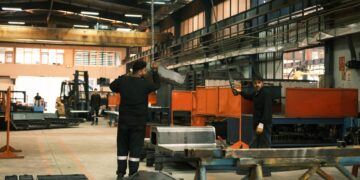
The recent contraction in Turkish industrial output represents a significant operational challenge for the country’s manufacturing baseline. A three-month consecutive decline in industrial production indicates sustained deceleration across core factory operations, impacting capacity utilization and output momentum. For an industrial base heavily integrated into global supply chains, a sharp drop in domestic manufacturing reflects both reduced domestic demand absorption and broader economic adjustments across key industrial hubs.
This prolonged downturn forces industrial enterprises to re-evaluate operational overhead, production scheduling, and inventory management strategies. Factory managers and industrial planners across Turkey are navigating rising structural costs while attempting to maintain competitiveness in international export markets. As internal manufacturing momentum slows, industrial firms are increasingly reliant on foreign trade channels to absorb surplus production capacity and sustain baseline operational revenues.
The broader impact of this three-month decline extends beyond immediate factory throughput. Sub-tier suppliers, raw material processors, and specialized component manufacturers are all adjusting to constrained order books. To counter domestic contraction, manufacturers are paying closer attention to foreign bilateral arrangements that offer predictable market access and preferential customs frameworks.
Bilateral Milestones: The Ukraine-Turkey Free Trade Agreement and Strategic Sectors
In contrast to domestic manufacturing headwinds, Turkey’s strategic trade architecture has reached a major landmark through the formalization of the Free Trade Agreement with Ukraine. This comprehensive bilateral pact spans an extensive array of commercial sectors, ranging from basic agricultural commodities like grain to highly sophisticated defense platforms such as uncrewed aerial vehicles and military drones. By lowering trade barriers, the agreement establishes a structured framework designed to deepen bilateral cooperation and secure vital cross-border supply chains.
A central pillar of the pact concerns heavy industry, specifically the trade parameters governing steel manufacturing. The agreement alters the competitive landscape for Ukrainian steel products entering the Turkish market, establishing clearer customs rules and revised tariff terms. Given that steel serves as a foundational input for construction, automotive, and industrial machinery sectors, these revised terms directly influence raw material pricing, procurement costs, and supply availability for Turkish processors and international buyers.
Simultaneously, the trade deal reinforces cooperation in agricultural commodities and high-technology manufacturing. Secure channels for grain shipments assist in stabilizing food processing supply chains, while collaborative pathways in defense engineering facilitate shared research, production capabilities, and cross-border hardware integration. This dual emphasis on low-tech raw inputs and high-tech strategic goods positions the agreement as a multi-layered cornerstone of regional industrial strategy.
Maturation and Bottlenecks in the Defense Industry
Turkey’s defense manufacturing domain reflects a nuanced combination of rapid growth and structural challenges. As the sector matures, its operational footprint is increasingly defined by a dual structure consisting of reliable, low-tech cash cows alongside persistent high-tech component bottlenecks. This structural bifurcation highlights both the strengths and vulnerabilities of Turkey’s domestic defense industrial base.
On one side of this dynamic, lower-technology defense platforms and standardized military hardware act as crucial financial anchors. These established products generate reliable export revenues and consistent cash flows, funding ongoing corporate operations and supporting domestic industrial infrastructure. They provide a predictable volume baseline for domestic machine shops, casting facilities, and assembly lines, helping mitigate wider volatility in civilian industrial output.
Conversely, the high-tech segment of defense manufacturing continues to grapple with severe supply chain bottlenecks. Advanced electronic systems, specialized sensors, precision optics, and complex propulsion technologies often rely on specialized foreign inputs or complex domestic development processes. These high-tech constraints create production delays, increase unit costs, and limit the speed at which advanced defense systems—such as military drones and guided ordnance—can be scaled to meet growing global demand.
Cross-Border Commercial Expansion and Regional Market Pressures
Beyond formal bilateral agreements, Turkey’s regional commercial reach is expanding significantly along its southern borders. Trade between Syria and Turkey has experienced notable expansion, driven by cross-border demand for manufactured consumer goods, building supplies, and basic industrial products. However, this growing commercial activity is creating complex market dynamics, pressuring local industries and altering regional economic balances.
For regional manufacturers and localized industrial producers, the surge in cross-border trade introduces intense market competition. The inflow of goods across the border can undercut local production costs, compelling smaller domestic enterprises to adapt their operational models or risk losing market share. Local industrial ecosystems are forced to navigate sudden price adjustments and shifting demand patterns resulting from expanded border trade.
At the same time, this cross-border trade expansion provides an outlet for Turkish suppliers seeking to offload excess output amid domestic production contractions. While it presents strategic revenue opportunities for border-adjacent distribution networks, it also underscores the ongoing challenge of balancing open regional trade flows with the protection and sustainability of local manufacturing bases.
Strategic Considerations for Buyers, Procurement Managers, and Investors
The combination of domestic industrial contraction, bilateral free trade agreements, defense bottlenecks, and regional trade shifts creates a dynamic operating environment for international procurement executives and industrial investors. Navigating this landscape requires a targeted approach across different supply chain segments.
Navigating Supply Chain Volatility in Heavy Industry
Procurement teams sourcing steel, fabricated metals, and heavy industrial machinery from Turkey must carefully evaluate how the Ukraine-Turkey Free Trade Agreement alters raw material availability and pricing. The modified terms for Ukrainian steel products may open new pathways for input sourcing, potentially lowering raw material costs for Turkish heavy manufacturers. However, buyers must weigh these advantages against the backdrop of contracting Turkish industrial output, which could lead to capacity rationalization or operational delays among secondary suppliers.
Evaluating Sourcing Opportunities in Defense and Advanced Manufacturing
For investors and buyers engaging with Turkey’s aerospace and defense ecosystems, understanding production bottlenecks is critical. While low-tech manufacturing lines offer reliable capacity and stable pricing, advanced procurement contracts involving military drones or high-precision technology require rigorous risk assessments. Sourcing strategists should evaluate component lead times and investigate whether high-tech bottlenecks could impact delivery schedules or escalate project budgets.
Managing Sourcing Risks Amid Shifting Trade Agreements
Companies operating across regional trade networks must account for changing competitive conditions driven by expanded commercial flows in regional markets such as Syria. Industrial buyers should monitor how border trade expansions affect local supply chains, transport logistics, and regional manufacturing margins. Maintaining flexible sourcing contracts and multi-tiered supplier lists can help mitigate localized disruptions and capitalize on shifting pricing structures.
Sectoral Outlook: Balancing Production Realities with Strategic Trade Alignment
Looking ahead, the Turkish industrial sector sits at a strategic crossroads. Overcoming the three-month decline in Turkish industrial output will depend on the speed at which internal demand recovers and how effectively manufacturers leverage expanding export arrangements. Strategic trade deals, such as the milestone agreement with Ukraine, offer clear structural pathways for boosting trade in steel, agricultural goods, and high-value defense systems, providing vital counterweights to domestic stagnation.
Furthermore, as Turkey’s defense industry works through its high-tech bottlenecks while continuing to leverage low-tech revenue drivers, it will serve as a bellwether for the broader industrial capability of the nation. Resolving supply constraints in critical technology segments will be essential for moving up the global industrial value chain. Meanwhile, regional commercial dynamics—including expanding cross-border trade with Syria—will continue to test the resilience and adaptability of local manufacturing centers, shaping the future trajectory of Turkey’s industrial economy.
Frequently Asked Questions
Why is Turkish industrial output experiencing a contraction?
Turkish industrial output is experiencing a contraction due to a deepening three-month decline in domestic industrial production, reflecting reduced demand absorption and operational adjustments across factory floors.
What key sectors are impacted by the Ukraine-Turkey Free Trade Agreement?
The Free Trade Agreement covers a wide range of goods, spanning agricultural commodities like grain, heavy industrial inputs such as steel products, and advanced defense equipment including drones.
How does the FTA with Turkey affect Ukrainian steel products?
The FTA alters tariff frameworks and customs conditions for Ukrainian steel, changing the competitive structure and raw material flow for steel products entering the Turkish industrial market.
What structural challenges exist in Turkey’s defense industry?
While Turkey’s defense industry relies on low-tech products as steady financial cash cows, it simultaneously faces persistent high-tech component bottlenecks that affect advanced equipment scaling.
How is expanding Syria-Turkey trade affecting local manufacturing?
Expanding cross-border trade increases commercial volume, but it also creates intense price competition that exerts operational pressure on local industries and localized manufacturing bases.
What should international buyers consider when sourcing industrial goods from Turkey?
Buyers should evaluate potential lead-time delays linked to industrial output contractions, leverage updated tariff terms under regional FTAs for heavy inputs like steel, and factor defense supply bottlenecks into procurement timelines.
Sources
- Turkish industrial output sharply contracts as 3-month decline deepens – Türkiye Today
- From grain to drones, the Ukraine-Turkey free trade agreement marks a milestone in bilateral cooperation – Atlantic Council
- FTA with Turkey: what will change for Ukrainian steel products – GMK Center
- Syria-Turkey Trade Expands, Pressuring Local Industry – Enab Baladi
- Low-tech cash cows and high-tech bottlenecks: Turkey’s defense industry matures – Brookings
Related Reading
- Türkiye Industrial Product Sales and Trade Expand in 2025
- EMITT 2026 Moves to Istanbul Expo Center: A Strategic New Chapter for Global Tourism
- Türkiye Emerges as a Key Sourcing Hub for Gulf and Asian Buyers
Looking to Source or Invest in Turkey?
Navigating suppliers, regulations and market entry in Turkey can be complex for international businesses. Burç Consulting provides on-the-ground sourcing, investment feasibility and market entry support for companies working with Turkey. Get in touch with our team to discuss your project.