EU Cuts Tariffs on the Turkish Steel Industry
Brussels has revised trade defense tariffs on cold-rolled coil from Türkiye, giving industrial buyers greater pricing clarity as automotive and green manufacturing sectors advance.
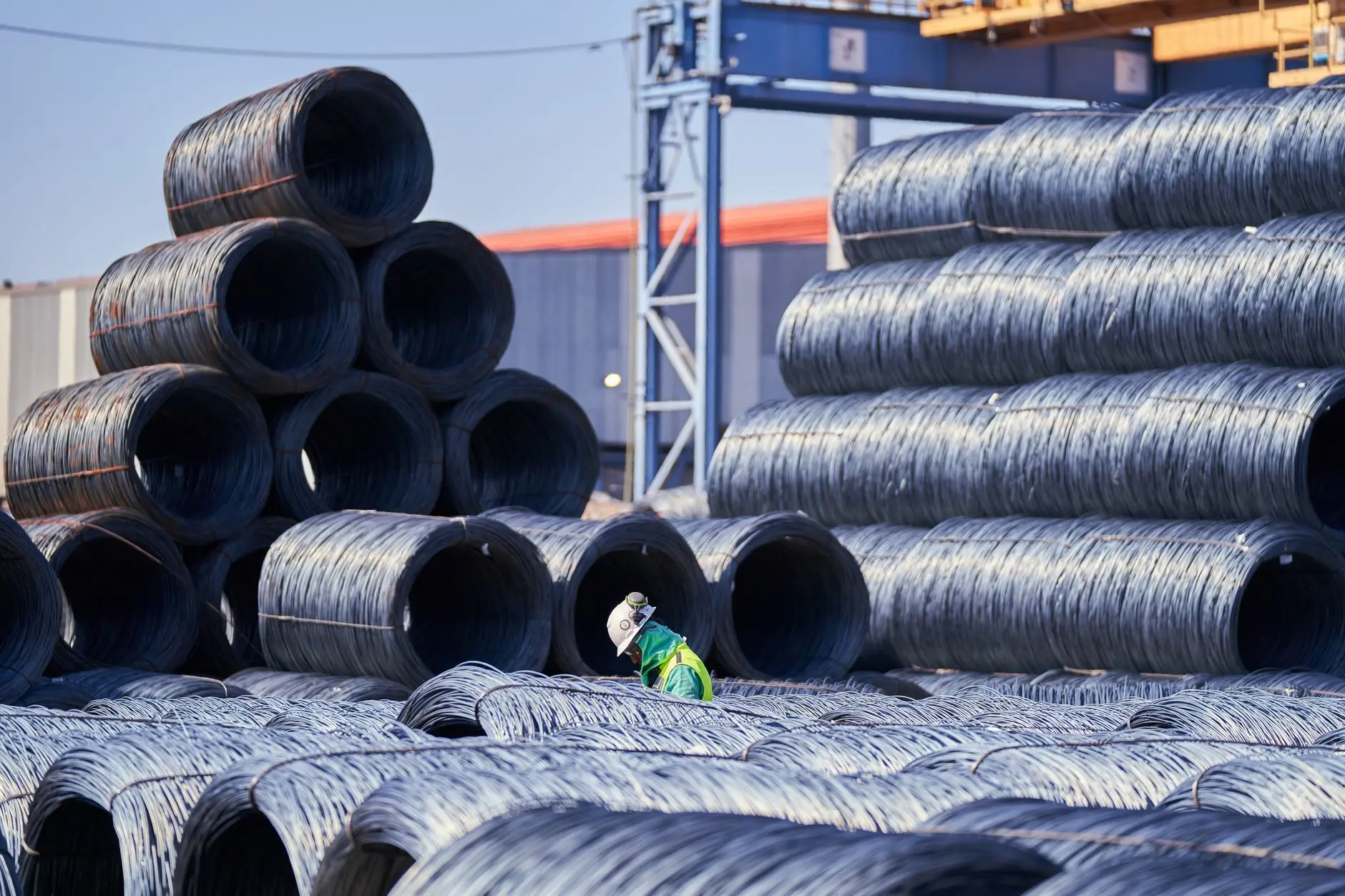
The European Commission has officially lowered anti-dumping duties on imports of cold-rolled steel from Türkiye, easing trade barriers on a vital industrial input used extensively across manufacturing. The regulatory adjustment, reported by industrial publication Metallurgprom and European steel trade association EUROMETAL, provides relief to Turkish flat-steel producers competing across the single market. For international procurement managers and manufacturers assessing supply resilience, the tariff reduction recalibrates cross-border supply chains just as Türkiye accelerates domestic industrial transformation across heavy manufacturing and automotive sectors.
Key takeaways
- The European Commission has reduced anti-dumping tariffs on cold-rolled coil imports originating from Türkiye.
- European trade monitors expect stable market conditions rather than immediate price disruptions due to prevailing import quotas.
- Downstream momentum builds as Türkiye’s automotive manufacturing sector targets record annual exports of $45.5 billion by 2027.
How European Commission tariff cuts affect the Turkish steel industry
Cold-rolled coil represents one of the most critical intermediate materials in modern industrial manufacturing. Produced by processing hot-rolled coil below its recrystallization temperature, cold-rolled steel offers precise dimensional tolerances, high tensile strength, and superior surface finishing. These characteristics make it indispensable for automotive body panels, domestic appliances, heating and ventilation systems, industrial shelving, and electrical enclosures. When the European Commission originally imposed trade defense duties on Turkish producers, European industrial buyers faced higher landed costs and tightened procurement margins.
According to EUROMETAL, the European Commission’s decision to cut anti-dumping duties on Turkish cold-rolled coil corrects previous trade defense calculations, acknowledging revised margin assessments for Turkish exporters. Industry analysis from the distributor network indicates that while the duty reduction provides immediate tariff relief, the move is expected to have no sudden disruptive impact on spot market prices across Europe. The existing European Union tariff-rate quota regime continues to cap overall import volumes, preventing sudden market distortion while offering established importers clearer pricing structures.
For the Turkish steel industry, the tariff reduction restores a degree of commercial competitiveness against non-European peers that operate under stricter trade restrictions. Turkish mills, clustered along the Marmara, Aegean, and Mediterranean coasts, benefit from direct deep-water port access, allowing short maritime transit times to southern and western European terminals. The regulatory change eliminates an unnecessary cost layer for compliant supply contracts without dismantling the broader safeguards that stabilize European industrial steel pricing.
Guide:OEM Manufacturers in Turkey: OEM vs ODM Guide
Downstream demand surges as automotive targets record $45.5 billion
The tariff revision arrives at a time of rising internal and regional demand for high-grade flat steel. According to a report by Hürriyet Daily News, Türkiye’s automotive sector has formally outlined a target to achieve a record $45.5 billion in annual export revenues by 2027. The automotive sector represents the country's single largest export engine, and its ambitious expansion plans depend directly on securing cost-effective, high-precision flat-rolled steel from reliable domestic and regional suppliers.
Automotive assembly plants and tier-one component suppliers operating in Türkiye consume massive volumes of specialized cold-rolled and galvanized coil. As vehicle manufacturers expand assembly lines for commercial vehicles, passenger cars, and electric platforms, local steel mills are prioritizing high-yield, defect-free cold-rolled materials. The simultaneous expansion of automotive export targets and the lowering of European import duties create a dual market pull for Turkish steelmakers, balancing domestic industrial absorption with European commercial deliveries.
This industrial synergy reinforces the strategic value of Türkiye's manufacturing corridor. Foreign original equipment manufacturers and component producers operating in Türkiye rely on integrated supply ecosystems where local raw material processing feeds directly into automotive stamping and assembly hubs in Kocaeli, Bursa, and Sakarya. Strengthening the trade viability of Turkish cold-rolled production supports both direct steel exports and the broader export values of downstream finished goods headed for Western Europe.
What it means for buyers sourcing from the Turkish steel industry
For European procurement executives, the European Commission’s tariff reduction provides immediate operational and contractual advantages. Companies that import cold-rolled coil directly from Turkish mills can now renegotiate contract pricing with lower duty burdens, reducing the financial guarantees and customs deposits previously required at European ports of entry. This makes Turkish cold-rolled coil a more viable alternative to Asian origins, which often carry longer sea transit times, higher freight rate volatility, and substantial trade defense penalties.
However, industrial buyers must maintain disciplined inventory planning around European import quota calendars. Even with reduced anti-dumping rates, Turkish steel remains subject to European Union safeguard quotas administered on a quarterly basis. Once country-specific or global residual quotas are exhausted within a given quarter, imports face a 25 percent out-of-quota tariff. Procurement officers must therefore coordinate closely with Turkish logistics providers and freight forwarders to ensure customs clearance occurs before quota allocations are filled.
Foreign investors evaluating manufacturing facilities within Türkiye also gain from this decision. Companies establishing light industrial, consumer appliance, or metal fabrication operations in Turkish free zones or organized industrial zones secure access to high-grade sheet metal produced under an increasingly favorable trade relationship with the European Union. The ability to source inputs locally and ship finished or semi-finished components into Europe under lower trade barriers strengthens the case for industrial nearshoring in Türkiye.
AI-backed green certification and environmental compliance
Beyond traditional trade defense mechanisms, the long-term viability of the Turkish steel industry in European markets hinges on decarbonization and verified environmental transparency. In a parallel development reported by Türkiye Today, the Turkish government is advancing plans for an artificial intelligence-backed certification system designed specifically for green industry. This initiative is aimed at helping manufacturers document, verify, and streamline compliance with international environmental standards.
Aligning with European CBAM mandates
The European Union's Carbon Border Adjustment Mechanism (CBAM) is already transitioning into its active phases, requiring importers of goods such as steel, aluminum, and cement to report embedded direct and indirect emissions. AI-supported certification systems will enable Turkish industrial producers to track complex energy inputs across electric arc furnaces, rolling mills, and pickling lines, producing auditable carbon accounting data that meets European Commission scrutiny.
Digital monitoring for industrial supply chains
Integrating artificial intelligence into environmental certification reduces the administrative burden on foreign buyers who must verify the carbon intensity of their supply base. For procurement departments required to audit scope 3 supply chain emissions, the deployment of automated, verified green certification tools in Türkiye provides legal certainty and lowers compliance overhead, distinguishing Turkish suppliers from competitors who lack robust reporting infrastructure.
Outlook for trade flows and industrial capacity
The European Commission’s decision to reduce anti-dumping duties provides a welcome stabilization point for trade relations between Brussels and Ankara. While the reduction does not eliminate all trade barriers, it removes an artificial pricing penalty that previously hindered commercial transactions. As long as European demand for manufactured goods remains steady, Turkish mills are well-positioned to maintain steady export volumes within the limits of existing safeguard quotas.
Looking ahead toward 2027, the convergence of lowered export tariffs, expanding domestic automotive demand, and modern green certification infrastructure creates a more resilient operating environment for industrial manufacturing in Türkiye. Foreign buyers and industrial investors who incorporate these trade dynamics into their mid-term sourcing strategies will find enhanced pricing flexibility, shorter lead times, and stronger compliance frameworks across the Turkish supply chain.
Sources
- European Commission cuts duties on cold-rolled steel from Turkey — Металлургпром
- Türkiye plans AI-backed certification for green industry — Türkiye Today
- European Commission cuts anti-dumping duties on Turkish cold-rolled coil; no new market impact expected — EUROMETAL
- Türkiye’s auto sector targets record $45.5 billion in exports in 2027 — Hürriyet Daily News
Frequently asked questions
What did the European Commission decide regarding Turkish steel?
The European Commission lowered its anti-dumping duties on cold-rolled steel products imported from Türkiye following an administrative review of trade defense margins.
Why is cold-rolled steel critical for international manufacturing?
Cold-rolled steel offers high strength, smooth surface quality, and precise thickness tolerances, making it an essential raw material for automotive panels, domestic appliances, industrial machinery, and construction components.
Will the duty reduction cause sudden steel price drops in Europe?
According to EUROMETAL, no major market disruption or price collapse is expected, because European steel safeguard quotas continue to cap overall import volumes across quarterly periods.
How does the automotive sector influence Turkish steel demand?
Türkiye's automotive sector has set an export target of $45.5 billion by 2027, creating significant domestic demand for high-quality flat and cold-rolled steel from local mills.
How is Türkiye preparing industrial exporters for green trade regulations?
Türkiye is implementing an artificial intelligence-backed green certification system to help industrial manufacturers track emissions, certify sustainable production, and comply with European CBAM regulations.
Do safeguard quotas still apply to Turkish steel imports into the EU?
Yes, imports of Turkish cold-rolled steel remain subject to the European Union's tariff-rate safeguard quota system, which imposes a 25 percent duty once quarterly volume allocations are exhausted.
More on this topic: Sourcing from Turkey: Manufacturers, Suppliers and Production