Turkey Data Center Investment: Ankara Gets $4.1B Hub
A landmark $4.1 billion data center campus planned for Ankara marks a major leap in Türkiye's digital infrastructure, opening fresh avenues for foreign tech investors and enterprise cloud buyers.

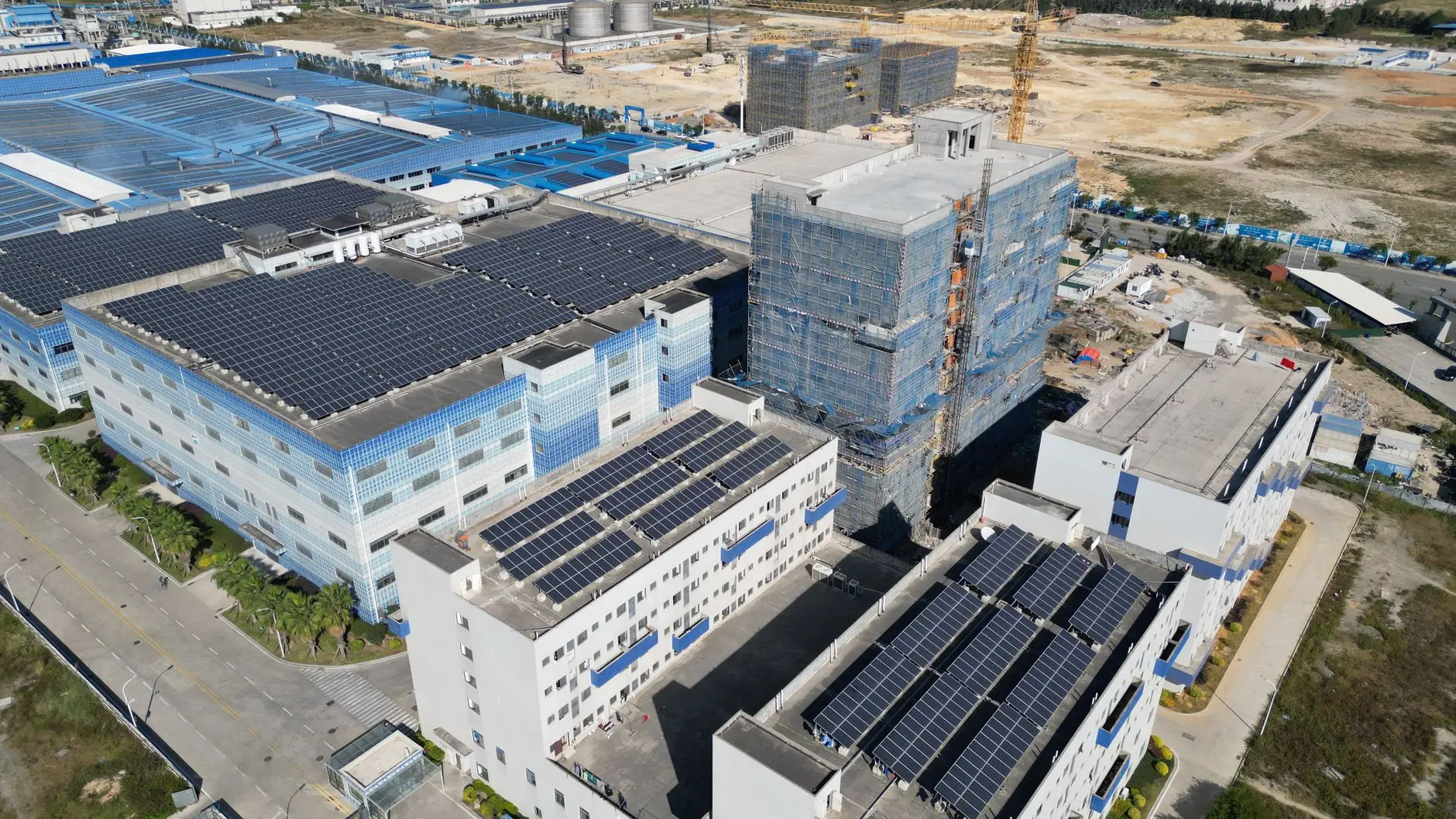
Türkiye has unveiled a landmark $4.1 billion investment project to establish a hyperscale data center campus in Ankara, according to reporting by AzerNews. The multi-billion-dollar initiative represents one of the largest single commitments to digital infrastructure in the country's history, designed to meet soaring domestic demand for high-performance computing, secure data localization, and artificial intelligence workloads. For global technology firms, cloud operators, and multinational corporations operating across Eurasia, this scale of turkey data center investment signals an aggressive state-backed push to transform the capital into a regional clearinghouse for enterprise data traffic.
Key takeaways
- A newly announced $4.1 billion data center campus in Ankara will substantially expand national server capacity, enterprise colocation, and cloud hosting infrastructure.
- The massive facility aligns with strict national data governance frameworks while lowering latency for regional and multinational businesses running digital operations across Türkiye.
- Foreign enterprise buyers and technology investors gain expanded local infrastructure options, easing compliance with Turkish regulatory mandates while tapping cheaper regional hosting alternatives.
Scaling infrastructure: The Ankara hyperscale development
The commitment of $4.1 billion toward an integrated data campus in Ankara marks a fundamental pivot in how Türkiye approaches technology infrastructure. Historically, corporate data hosting and commercial colocation in Türkiye have been heavily concentrated in and around Istanbul, the country’s commercial and financial nerve center. While Istanbul remains the natural landing point for international submarine fiber optic cables and cross-border telecommunications transit, centralizing compute power exclusively in the Marmara basin has created geographic bottlenecks and elevated systemic risk. Situating a flagship campus in Ankara introduces crucial geographic redundancy, placing mission-critical enterprise workloads and public sector computing in an inland hub with direct access to central Anatolian power grids.
According to AzerNews, the capital project is configured to host high-density server architectures capable of supporting advanced compute tasks, including machine learning pipelines, generative artificial intelligence modeling, and massive financial transactions. Developing such high-density sites demands access to enormous, uninterrupted electricity feeds, advanced liquid-cooling mechanisms, and carrier-neutral telecommunications connections. By clustering these resources into a single multi-facility campus, the development lowers the entry barrier for global cloud platforms and regional telecommunications players seeking managed colocation without having to navigate fragmented land acquisition and power permitting independently.
This major development also complements broader strides across Türkiye's advanced engineering ecosystem. While digital infrastructure scales on the ground, domestic aerospace and technology firms are concurrently advancing orbital and high-tech capabilities, highlighted by a homegrown satellite launch aboard a SpaceX rocket reported by Defensehere. Combined, these state-coordinated initiatives show a sustained policy emphasis on sovereign technological independence, pairing physical telecommunications assets in space with hardened physical computing clusters on the ground.
Data sovereignty and cybersecurity across national networks
The scale of this data center undertaking reflects urgent domestic priorities surrounding data sovereignty and national cybersecurity. Türkiye’s regulatory framework, overseen by authorities including the Information and Communication Technologies Authority (BTK) and the Personal Data Protection Authority (KVKK), has placed strict controls on how citizen records, banking metrics, and strategic corporate data are stored and handled. For years, multinational banks, insurance providers, healthcare networks, and software companies operating in the country have faced steep compliance hurdles when attempting to route domestic user information to offshore servers located in Frankfurt, Dublin, or Amsterdam.
Establishing a domestic hyperscale campus gives regulatory bodies the domestic hosting footprint needed to enforce localization rules without starving enterprises of modern cloud architectures. At the same time, expanding domestic server clusters raises the stakes for network defense. The operational vulnerability of connected systems was brought to the forefront recently when Turkish authorities initiated a nationwide cyber alert regarding critical vulnerabilities in PHP server environments, as reported by Daily Sabah. The alert highlighted how pervasive software flaws can expose interconnected enterprise servers across both the public and private sectors to remote exploitation.
As physical servers proliferate inside the Ankara campus, cybersecurity standards, zero-trust architectures, and automated patch management will become mandatory baselines for participating service providers. For international software vendors, managed security service providers (MSSPs), and hardware manufacturers, this creates an expanding market for cyber defense integration, network segmentation tools, and localized compliance audit services tailored specifically to the Turkish regulatory environment.
What it means for foreign investors and enterprise buyers
For international technology companies, private equity funds, and industrial conglomerates evaluating turkey data center investment, the Ankara project shifts the commercial equation in several distinct ways. Foreign enterprise buyers who rely on real-time data processing, automated logistics, or industrial IoT across Turkish manufacturing plants will experience lower latency, enhanced domestic throughput, and simplified regulatory compliance when storing proprietary records within national borders.
First, multinational corporations running manufacturing, retail, or fintech operations in Türkiye can finally reconcile strict local data privacy mandates with high-capacity cloud hosting. By deploying applications within a localized hyperscale campus, foreign enterprises eliminate the legal ambiguities and cross-border data transfer penalties that have historically complicated Turkish expansions. The availability of modern Tier III and Tier IV server halls reduces operational overhead, allowing international subsidiaries to lease dedicated server racks or private cloud partitions locally rather than maintaining expensive, proprietary on-premise server rooms.
Second, global infrastructure suppliers and engineering contractors have an immediate opening to deliver specialized data center hardware. Developing a $4.1 billion campus requires massive procurement volumes: high-efficiency uninterruptible power supply (UPS) units, modular backup diesel generators, precision liquid-cooling systems, advanced fiber-optic switching arrays, and seismic isolation structural engineering. Because Türkiye is keen to integrate global standard operational reliability, international industrial vendors that partner with local engineering contractors stand to capture significant supply contracts throughout the phased buildout.
Finally, for venture funds and international technology investors, the Ankara complex acts as a catalyst for downstream digital services. Large-scale data campuses inevitably attract software-as-a-service (SaaS) providers, AI developers, and system integrators seeking cheap compute power and low-latency connectivity. Investors looking to enter Türkiye’s tech ecosystem can leverage this centralized infrastructure to deploy localized digital products across the wider Middle East, North Africa, and Central Asia regions.
Navigating market integration: Connectivity, energy, and supply chains
Executing an infrastructure project of this magnitude requires foreign executives to examine three fundamental operational pillars: connectivity, power supply, and hardware supply chains. The commercial success of the Ankara facility depends on how seamlessly it interfaces with international communications corridors and domestic industrial consumers.
High-bandwidth backhaul and carrier neutrality
A premier data center is only as viable as the fiber routes connecting it to the outside world. Ankara sits at the geographic center of Türkiye’s national terrestrial fiber backbone, which connects the Mediterranean coast, the Black Sea, and border crossings into southeastern Europe. For international colocation tenants, carrier neutrality will be paramount. Multinational enterprises must ensure that the campus allows multiple domestic and foreign telecoms providers to establish points of presence (PoPs), preventing monopolistic pricing on bandwidth transit and ensuring redundant routing options during undersea or terrestrial fiber outages.
Power consumption and green grid integration
Data centers are exceptionally energy-intensive facilities, and international corporate tenants frequently face stringent corporate sustainability and ESG targets. For foreign firms assessing long-term leasing agreements in Ankara, power sourcing is a central consideration. Türkiye has added substantial renewable energy capacity over the past five years, particularly in wind, solar, and geothermal power across central and western Anatolia. Corporate tenants should examine whether the Ankara campus will offer direct Power Purchase Agreements (PPAs) with domestic green power producers, enabling multinational firms to power their compute clusters with certified renewable energy to meet international corporate sustainability benchmarks.
Strategic outlook for Türkiye's digital infrastructure
The launch of the Ankara development sets the stage for a broader transformation of Türkiye's position along Eurasian telecommunications corridors. As digital trade accelerates between Europe, the Gulf states, and Central Asian republics, the demand for intermediary data storage and regional processing nodes will continue to climb. Türkiye possesses a natural geographic advantage, sitting at the intersection of major subsea cable routes entering through the Aegean and overland transit cables moving eastward.
If the Ankara development achieves its planned operational capacity on schedule, it will solidify Türkiye's standing not merely as an industrial and logistics corridor, but as a major digital routing hub. Foreign enterprises operating in the country should anticipate a competitive shift among local cloud providers, leading to broader service availability, more flexible service-level agreements (SLAs), and a gradual decline in regional hosting costs. The long-term trajectory signals a more resilient, localized digital economy capable of supporting advanced automation, smart manufacturing, and large-scale cloud adoption across all major economic sectors.
Sources
Frequently asked questions
Why is Türkiye investing $4.1 billion in an Ankara data center campus?
The investment addresses rising domestic demand for cloud computing, high-performance computing, and artificial intelligence processing while strengthening national data sovereignty and providing geographic redundancy outside of Istanbul.
How does the Ankara data center project affect foreign companies operating in Türkiye?
Foreign firms gain access to modern, localized cloud and colocation infrastructure that makes compliance with Turkish data localization and privacy laws significantly easier, while lowering latency for regional operations.
Can foreign technology vendors participate in the construction and outfitting of the campus?
Yes, developing a hyperscale facility of this scale requires specialized international procurement, including advanced liquid-cooling systems, high-efficiency power equipment, optical network switches, and industrial cybersecurity architecture.
Does the facility address data protection compliance under Turkish KVKK regulations?
Locating enterprise servers and customer databases within a domestic hyperscale campus allows multinational companies to comply directly with KVKK rules that restrict the unmonitored cross-border transfer of personal data.
How does the project fit into Türkiye's broader technology strategy?
The campus complements national investments in high-tech manufacturing, defense hardware, and aerospace projects, forming the physical compute backbone required for autonomous systems, industrial automation, and enterprise cloud applications.
What are the primary operational challenges facing data centers in Türkiye?
Key operational priorities include securing carrier-neutral high-bandwidth fiber connectivity, maintaining reliable access to green power sources to meet corporate ESG standards, and mitigating cybersecurity threats across complex server environments.